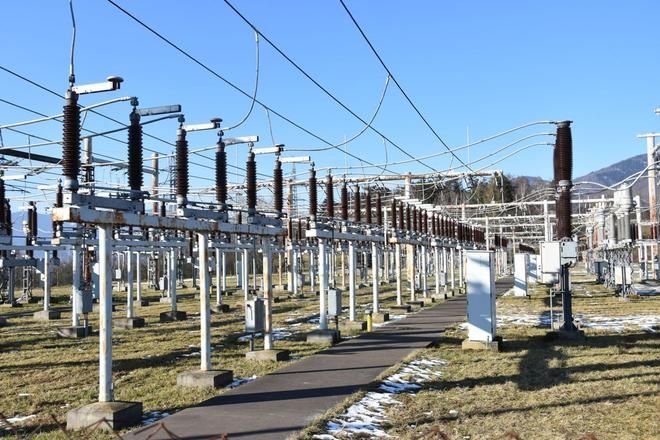
No Borders, No Warning: Invisible Attacks on Critical Infrastructure
Europe faces growing pressure on its critical infrastructure. Attacks that often lack a clear perpetrator or a single obvious motive are becoming tools for state destabilization. Without borders and without warning.
A new type of security reality is taking shape in Europe. It does not arrive with a clearly identifiable beginning, nor does it have a visible end. Instead of open clashes, it manifests as a series of incidents that may appear isolated at first glance but, in reality, point to a deeper shift: critical infrastructure is becoming one of the primary instruments of pressure between states. Energy, transport, and digital networks are no longer just technical backgrounds. They are the arenas where the resilience of states and their response capabilities are being tested.
Incidents that change the rules of the game
In recent years, events with a common pattern have been on the rise: they strike critical systems while remaining in the grey zone between accident, sabotage, and an intentional test of national endurance.
Damage to subsea cables in the Baltic Sea highlighted the vulnerability of infrastructure upon which both digital communication and energy depend. In Germany, a deliberate attack on the electrical grid caused a widespread blackout for tens of thousands of households and businesses. In the Baltic states, cases of rail infrastructure disruption have emerged, carrying suspicions of targeted interference.
Each of these incidents is unique. Together, however, they paint a picture of an environment where critical infrastructure is being weaponized to advance political and strategic goals.
The effect that exceeds the attack itself
An intervention in critical infrastructure has a specific character — its consequences do not end at the site of the incident.
A power outage halts production, restricts transport, disrupts services, and creates pressure on public institutions. The disruption of a logistical hub can cause delays in supply chains across multiple countries. A problem in data infrastructure immediately translates into issues for financial operations and the functioning of digital services. It is precisely this reach that makes critical infrastructure an exceptionally sensitive point for modern states.
What is unseen is most critical
The vast majority of the critical infrastructure upon which the global economy depends remains out of public sight. Subsea cables facilitate the bulk of international data communication. Energy grids, oil pipelines, and gas pipelines function as an interconnected system across borders. Logistics relies on precisely timed processes that leave little room for disruption.
These systems were designed for efficiency, not for conflict. This makes them particularly susceptible to interventions that, until only a few years ago, were considered purely hypothetical.
Europe is searching for the right model
Growing pressure on infrastructure is leading to a gradual shift in approach. The protection of critical systems is moving from a technical level to a strategic one. States are investing in strategic monitoring of critical infrastructure, bolstering cybersecurity, and improving coordination between the public and private sectors. At the same time, it is becoming clear that the traditional division between physical and digital security is no longer effective.
Incidents increasingly combine both dimensions—for example, a breach of control systems can lead to physical damage to equipment. Responding to these threats therefore requires an integrated approach.
Slovakia within the European infrastructure system
Slovakia is part of an infrastructural space that extends far beyond its borders. Energy interconnections, transit routes, and logistical corridors link it to neighboring countries, making it an important regional hub.
This position brings benefits but also responsibility. The stability of critical infrastructure in Slovakia has an impact on the broader European environment and is simultaneously influenced by events occurring outside its territory.
In practice, this means the security of critical infrastructure is not just a national issue. It is part of a broader discussion on the resilience of Europe as a whole. Collaboration at all levels is becoming the key factor: between critical sectors, between the state and private entities, between the professional community, and across national borders. Infrastructure resilience is not built through technology alone, but through the ability to cooperate, share information, and prepare for scenarios that cannot be solved in isolation. In an environment where threats increasingly cross borders, such coordination is a prerequisite for an effective response.
This is where professional and expert platforms play a vital role in connecting actors operating in the field of critical infrastructure. In Slovakia, this space is anchored by the Critical Infrastructure Association of the Slovak Republic (AKI SR), which provides the foundation for exchanging expertise, professional discussion, and identifying common challenges across sectors. It is a professional partner for all entities taking a strategic approach to risk anticipation and strengthening the resilience of their systems. Cooperation with the experienced experts of the Critical Infrastructure Association of the Slovak Republic transforms the complex risks that can threaten critical infrastructure into manageable challenges.