Introducing the Essential Critical Infrastructure Services: Storage of Crude Oil and Petroleum Products
The Critical Infrastructure Association of the Slovak Republic continues its series of articles devoted to the individual essential services defined under Act No. 367/2024 Coll. on Critical Infrastructure. This time, we focus on a service that is not immediately visible, yet without which it would be difficult for every litre of fuel in a Slovak tank to reach the consumer: the storage of crude oil and petroleum products.
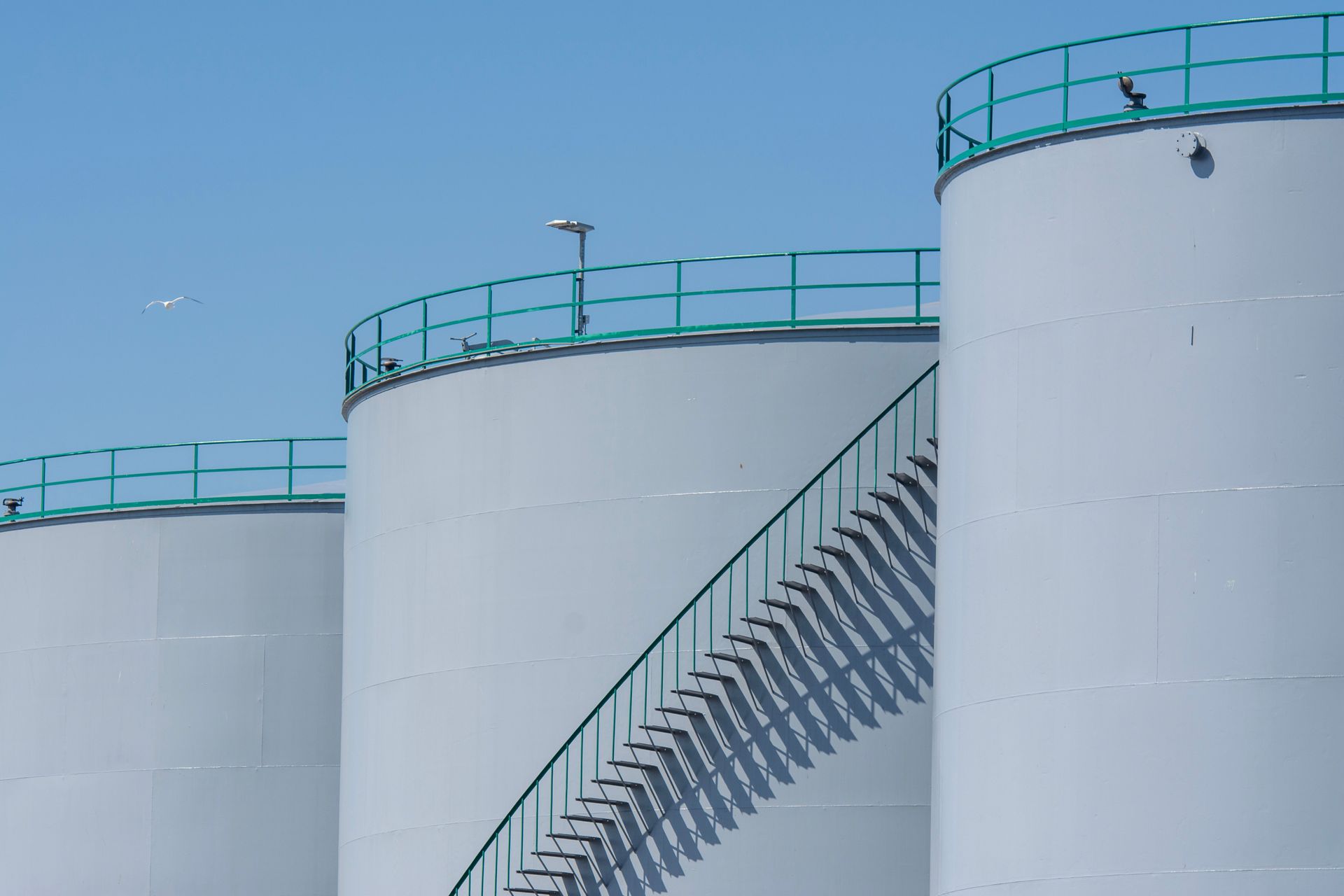
Crude oil is not processed in the Slovak economy the moment it crosses the border. Between transport by pipeline, the refinery, the distribution terminal and the filling station, there is a layer that balances time, volume, quality and risk. This layer - tanks, tank farms, product terminals and their supporting technology - is the subject of a separate essential critical infrastructure service.
Storage of Crude Oil and Petroleum Products in the Energy Sector
For clarity, we set out the position of this essential service within the energy sector as defined in Annex 1 to Act No. 367/2024 Coll. on Critical Infrastructure:
Sector: 1. Energy
Subsector: d) Crude Oil and Petroleum Products
Category of entities: Operators of facilities for the extraction, refining and processing of crude oil, and for the storage and transport of crude oil and petroleum products
Central authority: Ministry of Economy of the Slovak Republic
The storage of crude oil and petroleum products is therefore one of the five essential services in the Crude Oil and Petroleum Products subsector. These services are interdependent: without transport, there is nothing to store; without storage, there is nothing to supply to the refinery; and without refining, there is nothing to distribute.
Why Does It Matter?
Crude oil and petroleum products have one characteristic that makes them strategic commodities: they cannot be produced on demand. Extraction, transport and refining take place in real time and in volumes determined by technology, not by the customer’s immediate needs. Storage is therefore the only mechanism that can separate the time of delivery from the time of consumption.
In practice, this means several specific things. Storage helps manage seasonal changes in demand and fuel composition - for example, by ensuring the availability of diesel suitable for winter temperatures and petrol formulated for summer conditions. It also helps meet increased demand during the heating season and the agricultural campaign. Storage makes it possible to keep crude oil batches of different qualities separate, allowing the refinery to process feedstock with the parameters for which it is configured. It supports continuity of supply in the event of a pipeline disruption, an accident, sanctions or a geopolitical shock. Last but not least, it is a technical prerequisite for maintaining emergency stocks - although these are a separate service, which we will cover in the next article.
A disruption to this service may not become apparent immediately, but its effects can be all the more severe. While a power outage can bring a country to a standstill within seconds, a loss of storage capacity would be felt over days or weeks - first through a reduced range of products at filling stations, followed by interruptions to supplies for industry, agriculture, healthcare and emergency services. This is precisely why the storage of crude oil and petroleum products is an essential service, not merely a commercial activity.
Central State Administration Authority
The central state administration authority for the energy sector, including the Crude Oil and Petroleum Products subsector, is the Ministry of Economy of the Slovak Republic. The Ministry identifies critical infrastructure entities in the subsector, assesses risk analyses and security plans, coordinates measures to strengthen resilience and, in crisis situations, acts as the lead authority in addressing a state of oil emergency.
Other ministries and public authorities are also involved in storage operations - from customs authorities responsible for tax warehouses to fire protection authorities and environmental inspectorates overseeing facilities covered by the major industrial accident prevention regime.
Entities Providing Crude Oil and Petroleum Product Storage
There are several types of storage capacity on the Slovak market, differing in the commodities stored, the technology used and the ownership model.
The first pillar is crude oil storage within the pipeline system. The operator of the pipeline system in the Slovak Republic is TRANSPETROL, a. s., whose sole shareholder is the Slovak Republic, represented by the Ministry of Economy of the Slovak Republic. The company operates tanks at pumping station sites in Budkovce, Moldava nad Bodvou, Rimavská Sobota, Tupá, Bučany and Šahy. According to its 2024 annual report, the storage capacity of the tanks operated by the company was 316,500 tonnes of crude oil, including tank bottoms, or 277,900 tonnes excluding them, based on a conversion for REBCO crude oil. In 2024, the average daily invoiced quantity of stored crude oil was 93,568 tonnes, an increase of more than 9% year on year compared with 85,737 tonnes in 2023.
The second pillar is the storage of petroleum products in product terminals. The most significant operator is the SLOVNAFT, a. s. refinery in Bratislava - the only refinery in Slovakia - and its subsidiary Zväz pre skladovanie zásob, a. s., which provides petroleum product storage under a long-term contractual arrangement. These facilities are technologically integrated with the refinery and product pipelines and therefore cannot be operated in isolation.
The third pillar is state-owned storage infrastructure. Spoločnosť pre skladovanie, a. s., based in Trakovice, was established in 2013, with “storage of crude oil and petroleum products” as its principal business activity. Its shareholders are TRANSPETROL, a. s. and the Administration of State Material Reserves of the Slovak Republic. The company owns the tanks, but not the entire supporting infrastructure, such as product pipelines, associated equipment or the land beneath the facilities.
The fourth pillar comprises smaller and specialised storage facilities — fuel terminals, tax warehouses, aviation kerosene depots, lubricant and bitumen storage facilities, as well as operational tanks at industrial plants. Although they do not individually have the strategic significance of large tank farms, together they provide the distribution network density without which fuel could not reach consumers.
What the Storage of Crude Oil and Petroleum Products Means in Practice
In this context, storage is not passive “parking” of a commodity. It is a set of technological and organisational activities that must operate continuously and with a high degree of precision.
These activities include operating above-ground and underground tanks, ensuring their tightness, maintaining venting systems and containment bunds, and providing fire protection. They also include measuring and recording quantities - using level gauges and flow meters, and calculating volumes at a reference temperature - in ways that meet the requirements of both customs supervision and business partners. Quality management is another integral part: segregating batches, monitoring parameters, blending and adding additives, and checking products before they are released into the distribution network. Finally, there is logistics and transfer: connecting tanks to crude oil pipelines, product pipelines, rail tankers and road tankers.
The technological demands are greater than they may first appear. A large-capacity tank at the Bučany pumping station site has a diameter of 69 metres and a height of 22.3 metres. It must be surrounded by a containment bund capable of holding its entire contents. A tank with a capacity of 75,000 m³ holds approximately 65,250 tonnes of REBCO crude oil - enough, by itself, to supply a refinery for several days.
Figures That Show the Scale of the Service
Specific figures best illustrate the scale of the system behind this service.
The Slovak section of the Druzhba pipeline has a transport capacity of 20 million tonnes of crude oil per year. In 2024, however, TRANSPETROL, a. s. transported a total of 7,462,584 tonnes of crude oil: 4,747,906 tonnes for SLOVNAFT, a. s. (including 645,519 tonnes of non-Russian crude oil transported via the ADRIA pipeline) and 2,714,678 tonnes for the Czech refinery ORLEN Unipetrol RPA, representing 36% of total transport. The utilisation of Druzhba’s capacity was therefore approximately 37%.
The ADRIA pipeline, which enters Slovakia near the village of Tešmak and connects to Druzhba at Tupá, has a transport capacity of 5.4 to 5.9 million tonnes per year, depending on the type of crude oil and the transport method. The 645,519 tonnes actually transported in 2024 represented roughly 11–12% of this capacity. This illustrates the strategic difference between technical capacity and actual utilisation: existing but unused capacity contributes to the resilience of the state only if it can be fully activated in a crisis.
TRANSPETROL’s crude oil storage capacity of 316,500 tonnes, compared with the average daily invoiced quantity of 93,568 tonnes, represents approximately three and a half days of storage at that invoiced level. This calculation is not a measure of security of supply - that is what emergency stocks are for -but it illustrates how sensitive the system is to the continuity of transport. The storage layer within the pipeline system is thin; its role is to smooth operational fluctuations, not to replace strategic reserves.
Investment activity is also substantial. The H101B tank, with a capacity of 75,000 m³, has been built at the Tupá site, and the construction of another tank, H101D, with the same capacity, is being prepared. At Bučany, or in the cadastral area of the neighbouring village of Trakovice, the company plans to build two new tanks of 75,000 m³ each, at an estimated cost of approximately EUR 80 million, with commissioning planned for late 2027. In 2024, TRANSPETROL invested EUR 19.412 million in technical and investment development, compared with EUR 11.212 million in 2023.
Specific Features and Risks of This Essential Service
The risk profile of crude oil and petroleum product storage differs significantly from that of electricity, gas or water. It combines industrial safety, environmental impact, cyber vulnerability and geopolitical exposure.
Technological and fire risks. Crude oil and petroleum products are flammable liquids with low flash points; petrol vapours can ignite even at ordinary temperatures. The risk is not limited to fire itself, but also includes vapour explosions in enclosed spaces, tank overheating, failure of breather valves and loss of containment. Tank farms are therefore equipped with containment bunds, foam fire suppression, cooling systems for neighbouring tanks and leak detection systems. For large-capacity tanks, it is crucial to prevent an incident in one tank from spreading to neighbouring tanks - this is a key consideration in the layout of tank farm sites.
Environmental risks. The release of crude oil or petroleum products into soil and groundwater is among the most serious industrial accidents. The risk is not limited to the moment of an accident: ageing tanks, sludge layers and contaminated ground can create a long-term environmental burden that becomes apparent during reconstruction or decommissioning. Facilities of this type therefore fall under the major industrial accident prevention regime.
Cyber risks. A modern tank farm is a digitally controlled industrial facility. Level gauges, automated tank measurement systems, pumping control systems, pipeline telemetry, invoicing systems and commercial systems are all potential points through which physical operations could be affected. Manipulating measurement data may not cause an accident, but it can create a discrepancy between recorded and actual quantities, with both security and financial implications for a strategic commodity. The risk is amplified by connections between these systems and the company’s commercial and information systems.
Physical and security risks. Tank farms are extensive sites with a limited number of entrances but many technological points. A tank with a diameter of 69 metres cannot be concealed or overlooked - it is a visible target. In addition to sabotage and terrorism, threats include unauthorised entry, theft and vandalism, as well as newer forms of risk, such as unmanned aerial vehicles over facilities or targeted disruption of camera and access control systems.
Dependence on supply chains and a limited number of operators. Slovakia has one refinery, one pipeline system operator and a limited number of large storage operators. This concentration is efficient in normal operations, but it means that the failure of a single entity can have nationwide consequences. Dependence on imported technology is equally important - including valves, pumps, measuring equipment, seals, control system software and service capacity. If a supplier is unavailable for an extended period, a tank may be technically sound, but there may be no component or specialist available to return it to service.
Crude Oil Storage Is Not the Same as Emergency Stock Management
Annex 1 to the Critical Infrastructure Act also lists, within the same Crude Oil and Petroleum Products subsector, a separate service: the management of emergency stocks of crude oil and petroleum products and special stocks of petroleum products. In this case, the central authority is the Administration of State Material Reserves of the Slovak Republic, not the Ministry of Economy of the Slovak Republic.
The distinction is significant and is often blurred in practice. The storage of crude oil and petroleum products is a technical and operational service: it concerns the availability of functional tanks, terminals and technologies capable of receiving, holding and releasing the commodity. Emergency stock management is a policy requirement and an obligation: it concerns ensuring that the state has the prescribed quantity of the commodity available and can release it in a crisis. Storage is therefore a prerequisite, while emergency stocks are the contents. Without storage capacity, stocks cannot be maintained; but the existence of capacity alone does not mean that the state holds stocks of the required quantity and quality.
For this reason, we will devote a separate, forthcoming article in the series to this second service, including the European 90-day framework, the funding model and the current state of stocks.
The Role of the Critical Infrastructure Association of the Slovak Republic
Operators of storage capacity today face a combination of regulatory requirements, security threats and investment decisions with time horizons measured in decades. A tank is designed to last for decades, but its risk profile can change within months. The Critical Infrastructure Act therefore introduces new obligations relating to risk assessment, the preparation of security plans, the designation of responsible persons and incident management -even for entities whose core business is storage rather than security.
The AKI SR brings critical entities, technology suppliers, experts and professional organisations together on a single platform. For entities in the Crude Oil and Petroleum Products subsector, it provides methodological support in meeting obligations under the Critical Infrastructure Act; assistance with risk analysis and vulnerability identification; support in preparing security documentation and business continuity plans; consultation on the cybersecurity of industrial control systems; the exchange of experience among infrastructure operators and across sectors; expert opinions on proposed legislation; and contact with public authorities and regulators.
The connection between physical and cyber security deserves particular attention. At tank farms and product terminals, the security of measurement, control and record-keeping is just as important as the security of the tank itself. Capacity renewal is also a key issue: Slovakia has technically sound storage infrastructure, but its age, ownership structure and dependence on a limited group of suppliers create risks that may only become apparent when they are most difficult to address.
Storage as a Pillar of the System’s Smooth Operation
The importance of crude oil and petroleum product storage is often recognised by the public only when the service is disrupted. It is a large-scale technical infrastructure comprising tanks, pipelines, measurement systems and the specialists who operate them. Its role in the critical infrastructure system is indispensable: it creates time to respond to supply disruptions and provides the capacity needed to maintain the smooth supply of the economy.
In the next instalment of the series, we will remain within the Crude Oil and Petroleum Products subsector and focus on the management of emergency stocks of crude oil and petroleum products and special stocks of petroleum products - that is, how much of these commodities Slovakia must have prepared and how these stocks are managed.