Lithuania Strengthens Protection of Critical Infrastructure After Attempted Sabotage. What Should Slovakia Do?
The attempted arson attack on Starlink equipment in Vilnius shows that threatening strategic services does not require a large-scale attack. For Slovakia, this is a warning about the risks associated with damage to individual technological components and about the possible consequences for the functioning of critical infrastructure.
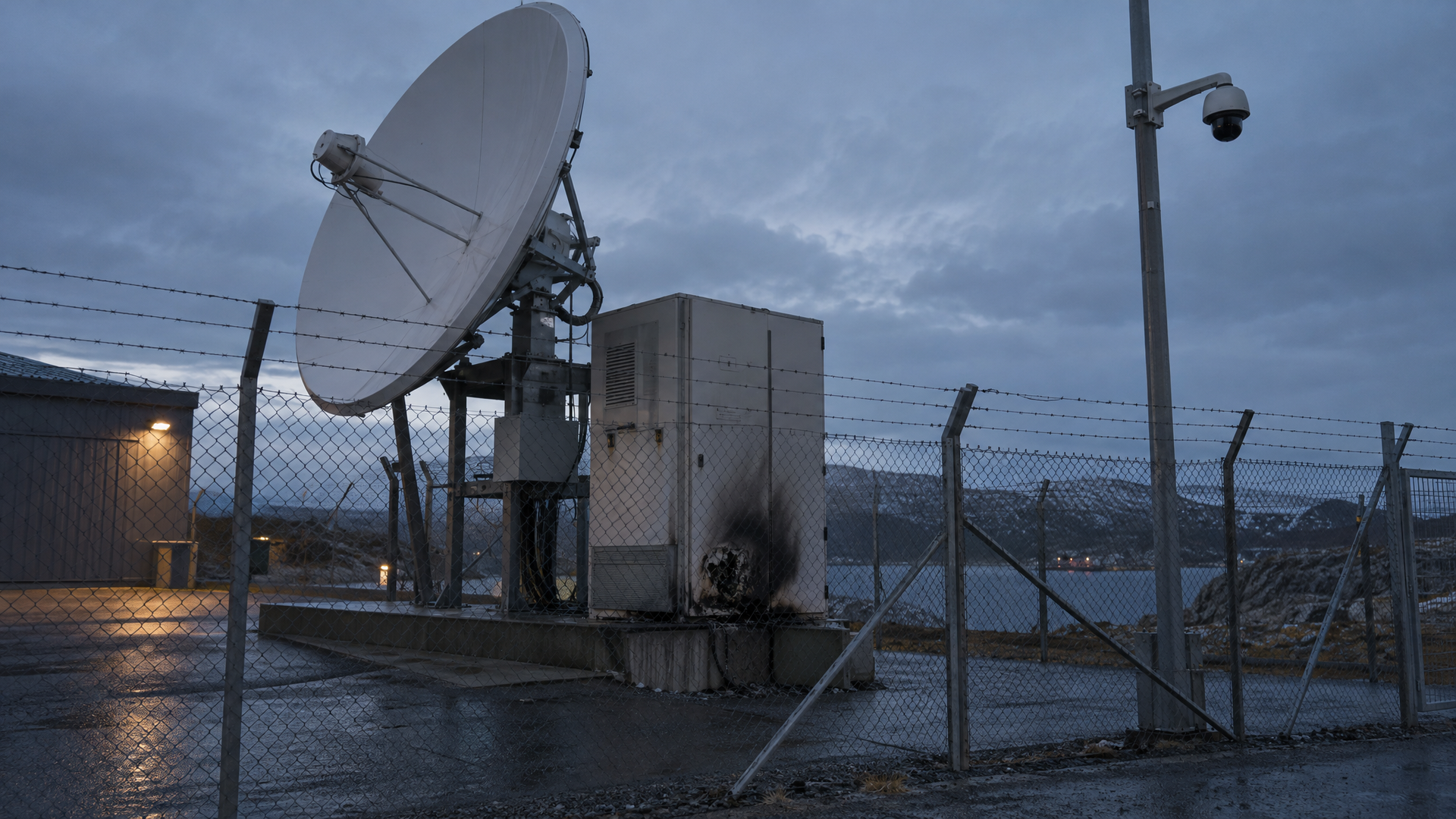
Following the incident of 18 October 2026, Lithuania announced tighter protection for more than 15 facilities of national importance. The target of the attempted arson was Starlink communication equipment on the premises of the company Delska Lithuania in Vilnius. The fire was extinguished before firefighters arrived and, according to available information, did not disrupt operations. Lithuanian authorities are investigating the case on suspicion of sabotage.
Lithuania subsequently decided to strengthen security measures, including the involvement of the armed forces. The broader context of the incident remains under investigation.
What does this mean for Slovakia?
Even damage to a single device can have consequences extending beyond the boundaries of a specific facility. If it is a component of a communication network or of technology essential for managing operations, its failure may affect other organisations and services.
Energy, transport, electronic communications, healthcare and water supply are interconnected. An outage in one sector may limit the functioning of others, especially where alternative solutions are lacking.
What is decisive is not the size of the equipment, but its importance for the functioning of the system
When assessing risks, it is therefore not enough to determine which facilities are strategically important. It is equally important to identify the individual technologies, nodes and connections whose disabling could trigger a chain of further outages. It is precisely these inconspicuous dependencies that may represent the weak point overlooked in routine security assessments.
The Critical Infrastructure Association of the Slovak Republic therefore considers it necessary to supplement the protection of facilities with the testing of a scenario: What happens if this single component fails? Such a test should show not only whether the equipment is protected, but also which other services its failure will affect, who must be informed about the situation, and what backup solution is genuinely available.
For Slovakia, this implies the need to focus on three areas:
Physical protection: review the security of strategic facilities, access control, monitoring and the ability to respond in time to suspicious activity.
Dependencies on technologies and suppliers: identify components whose failure would jeopardise the provision of an essential service, including communication links and remote management systems.
Business continuity: ensure the availability of backup solutions and procedures that make it possible to maintain or restore a service after key equipment is damaged.
Legislation must also work in practice
Slovak Act No. 367/2024 Coll. on critical infrastructure, effective from 1 January 2025, builds on Directive (EU) 2022/2557 of the European Parliament and of the Council of 14 December 2022 on the resilience of critical entities.
The European framework covers the assessment of both natural and human-made threats, including sabotage and hybrid attacks. Critical entities are expected to adopt appropriate measures to protect and to maintain or restore the provision of essential services.
However, the mere existence of security plans does not prove that an organisation is able to handle a specific incident. What is decisive is their usability in practice and the ability to respond to a situation involving damage to equipment, a communications outage or a combination of several failures.
Tibor Straka: The security of critical infrastructure is tested in practice, not on paper
Tibor Straka, President of the Critical Infrastructure Association of the Slovak Republic, points out that the protection of strategic facilities must be based on specific risks and on preparedness for their consequences.
"The Lithuanian case is a clear warning: even damage to a single component can jeopardise a service on which other systems depend. In Slovakia, we need to identify the most vulnerable facilities, review their physical protection and determine how they will ensure operations in the event of a failure of key technologies or communications. Every operator must know what it will do in the first minutes of an incident and how it will restore the provision of the service."
The Critical Infrastructure Association of the Slovak Republic considers it important that the responsible authorities and operators have clearly defined procedures for security incidents and are able to exchange relevant information in a timely manner. Preparation should also include model exercises testing the response to damage to strategic equipment or an outage of communication systems. Their results should be translated into specific corrective measures with assigned responsibility and deadlines.
From Lithuania's experience to concrete results
Slovakia does not have to automatically adopt the measures taken in Lithuania. It does, however, need to evaluate its own risks and focus attention on facilities whose damage would have the most serious consequences for the provision of essential services.
The result should be a clear overview of critical dependencies, functional backup solutions and verified procedures for the event of an incident. Every critical entity must know how it will protect key equipment, how it will ensure operations if that equipment fails, and within what time it can restore the provision of the service.