Gas Above €100/MWh: The Price Record Is Not Just Economic News. For Critical Entities, It Is a Test of Preparedness
The European benchmark gas price has exceeded one hundred euros per megawatt-hour for the first time since December 2022. The Critical Infrastructure Association of the Slovak Republic points out that for operators of essential services, a different number is decisive: the number of hours they can keep operating if supplies are restricted.
What happened
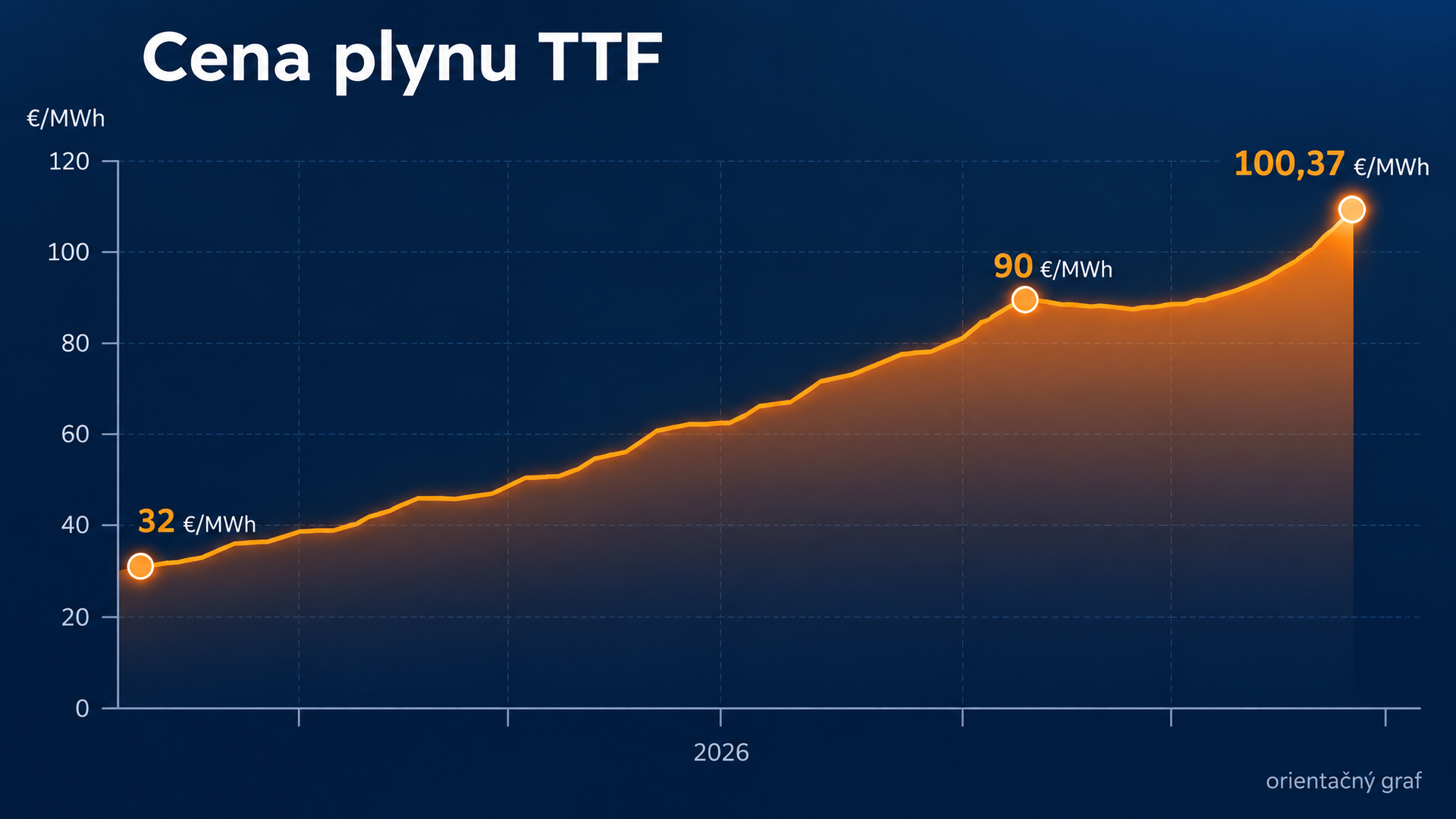
On Wednesday, 28 October 2026, the Dutch TTF front-month contract reached €100.37 per MWh. This is the first time the hundred-euro threshold has been crossed since December 2022. EU Energy Commissioner Dan Jørgensen warned that the Union is facing another energy crisis and a difficult winter for both households and the economy. EU storage facilities are entering the heating season filled to approximately three quarters, below the usual target of ninety percent. (Štandard)
From €32 to €100: a comparison with the pre-war period
The figure itself only acquires meaning when compared with the starting point. Before the war with Iran began in February, gas on the European market cost approximately €32 per megawatt-hour. Today's €100.37 therefore represents more than three times that level.
For critical infrastructure, however, three shifts hidden behind this number matter more:
- Predictability has been lost. At a price of around €32, energy was a stable cost item that could be contracted in advance and then set aside. That model has stopped working. Prices now move in monthly, not annual, intervals.
- Vulnerability has moved outside Europe. The conflict has disrupted supplies of liquefied natural gas, particularly from Qatar. The European price therefore responds to events in regions over which the Union has no influence.
- Energy has changed its place in the risk register. Before the war, it was a budget item. Today it belongs in continuity plans alongside cyber threats or supplier failure.
Why this matters
A higher price will not by itself cause an essential service to fail. It does, however, cause three things that show up in critical infrastructure with a delay:
- Money shifts from resilience to operations. Energy costs rise immediately, while budgets for maintenance, modernisation and security measures are only adjusted in the next budget cycle. These are precisely the items cut first.
- Pressure on the supply chain. A critical entity need not be energy-intensive itself. Its supplier of chemicals, packaging, heat or servicing may well be. A failure then appears as a supply failure, not as an energy failure.
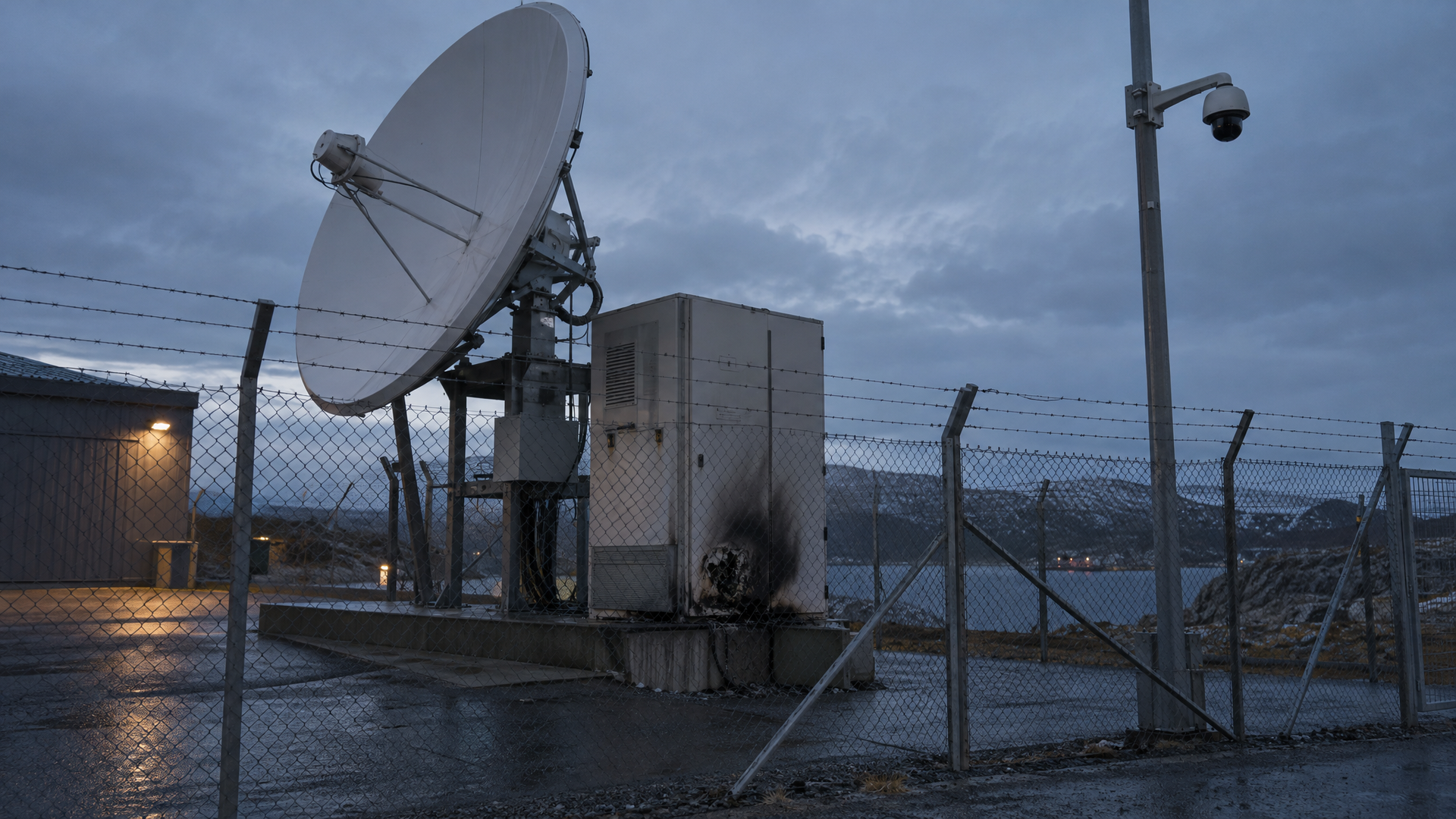
- Convergence with other threats. The price shock comes at a time when incidents on the energy grid and attempted sabotage of technological components are multiplying across Europe - topics AKI SR has covered in its analyses of attacks on the distribution network in France (Europe Faces a New Critical Iinfrastructure Problem: Attacks Target the Power Grid Not Just Power Plants) and of the attempted arson attack on Starlink equipment in Vilnius (Lithuania Strengthens Protection of Critical Infrastructure After Attempted Sabotage. What Should Slovakia Do?).
Following up on what we flagged eight days ago
On 20 October 2026, AKI SR published the analysis Gas Prices Once Again Test Europe´s Energy Security. At that time, the benchmark price was below the ninety-euro mark. In eight days, it has risen by roughly one fifth.
The practical conclusion: the pace of change today is faster than the pace at which continuity plans are typically updated. If an organisation built its budget scenario on October prices, it is out of date after eight days.
What gets lost in the debate: not every critical entity knows exactly where it stands in the order of supply restrictions
This topic does not appear in media coverage of prices, although in practice it is more important than the exchange quotation itself. If a gas emergency occurs, consumers are not restricted simultaneously or evenly. The process follows predetermined categories and consumption restriction levels, which are tied to the contract with the supplier and to the classification of the connection point.
Practical experience shows that some organisations work on the assumption that "we are critical infrastructure, restrictions do not apply to us." This assumption may not correspond to how the connection point is actually classified. Classification derives from technical and contractual parameters, not automatically from the entity's status. Moreover, an organisation with several sites may have individual connection points classified differently, and central management may not know about it — only the technician on site.
What we recommend verifying now
In the October analysis, we identified four areas: energy dependence, backup solutions, operational continuity and economic scenarios. Current developments add three steps that make sense before winter arrives:
- Verify the classification of every connection point for supply restrictions and have this information in writing, not verbally. It takes a few minutes, and its absence becomes apparent only when it is too late to put it right.
- Set a price threshold that automatically triggers a review of the budget and the continuity plan — a specific value and a specific person responsible, not general market monitoring.
- Distinguish three variables that merge into one in the discussion. The price of gas, the physical availability of gas and a given entity's ability to continue operating are three different things, and they do not develop at the same pace. An organisation may have its supply secured and still not have its service secured.
AKI SR position
"The exchange price is a figure that changes every day. The ability to maintain an essential service takes months to build, and in a crisis it cannot be replaced quickly. We therefore recommend that critical entities verify today not only what they will pay, but also what will happen to their operations if supplies are restricted — and that they have this answer verified in practice, not only on paper," says Tibor Straka, President of the Critical Infrastructure Association o the Slovak Republic.
The role of the association
The Critical Infrastructure Association of the Slovak Republic provides a professional platform for critical entities, their suppliers, experts and partners working in the security and resilience of strategic sectors. On this topic, it performs three specific functions:
- Expert support with implementing legislation — it offers consultations and support to critical entities designated under Act No. 367/2024 Coll. on Critical Infrastructure in building resilience and meeting the requirements arising from the new regulation.
- Dialogue with state administration — in June 2026, AKI SR signed a memorandum of cooperation with the Ministry of Economy of the Slovak Republic, the central state administration body for, among other things, gas, electricity, nuclear energy, oil and district heating. The memorandum also includes submitting proposals for legislative changes.
- Transferring information into practice — the association continuously evaluates security risks in terms of their practical significance for operators and facilitates the exchange of experience among members across sectors.
Resilience is tested before a crisis
Rising gas prices are a warning that preparing for winter requires more than watching the market or relying on general assurances. Every critical entity needs to know which of its operations are at risk, how long they can function under restricted supplies, and whether it has realistic backup solutions in place.
Preparedness is not demonstrated by a plan in a drawer, but by the ability to maintain an essential service when conditions change. That ability needs to be tested now — not when it is too late to act.