Electricity Demand Management: The Unassuming Pillar Behind a Reliable Power Supply
In this series, the Critical Infrastructure Association of the Slovak Republic (AKI SR) is gradually introducing the individual essential services listed in Annex No. 1 of the Critical Infrastructure Act – in other words, those activities without which the economic and social life of the state would quite literally grind to a halt. After the previous instalments, this time we turn to a service that most people have never heard named, yet rely on every second of the day: electricity demand management.
When the frequency in the European interconnected system practically dropped from 50 Hz to 49.74 Hz on January 8, 2021, at 14:04 Central European Time, most Slovaks noticed nothing. Coffee machines were brewing, lifts were running, hospitals were operating. That Europe was, at that moment, mere tens of milliseconds away from the system splitting into islands and a blackout that would have cut electricity to tens of millions of people, was prevented largely by the mechanisms hidden in Slovak legislation under this rather dull-sounding name. Demand management keeps a lid on what most of us only realise when the lights go out – that electricity cannot be stored on a large scale and must be produced at the exact second someone consumes it. And that if consumption is not disciplined, the system collapses.
That is why the legislator ranks demand management among services whose failure "would have a serious impact on the functioning of the economic and social life of the state". It sounds bureaucratic, but in practice it means that without it, on a freezing February evening when all of Slovakia is simultaneously cooking, heating and watching the news, we would run into problems that cannot be solved by an apology in a press release.
Where the law places this service
Electricity demand management is classified as an essential service under Annex No. 1 of the Critical Infrastructure Act. Within the sector structure, it is placed as follows:
Sector: Energy
Sub-sector: Electricity
Central authority: Ministry of Economy of the Slovak Republic
Category of entities: electricity undertakings under a special regulation (§ 3 letter b), point five of Act No. 251/2012 Coll. on Energy, as amended)
Not everyone with a transformer behind their fence becomes a critical entity in this sub-sector. The law and its implementing regulations work with sector-specific thresholds – simplified, they look at factors such as the number of off-take points, installed capacity, market share, or the role the entity plays in balancing the system. Whoever exceeds these thresholds ends up on the list of operators of essential services (OES) or critical entities, with all the obligations that come with it.
Who this really concerns in Slovakia
In practice, this is a fairly narrow circle of players, without whom the Slovak power system would grind to a halt within minutes:
Slovenská elektrizačná prenosová sústava, a. s. (SEPS) – the transmission system operator, the dispatcher that physically holds the frequency at 50 Hz, contractually and technically responsible for activating ancillary services and, in extreme cases, for controlled demand curtailment (so-called frequency plans and load-shedding plans).
Distribution companies – Západoslovenská distribučná (ZSD), Stredoslovenská distribučná (SSD), and Východoslovenská distribučná (VSD). They are the ones who implement in the field what the dispatcher orders – including ripple-control (HDO) signals, switching of loads, and, in extreme situations, rotational load shedding.
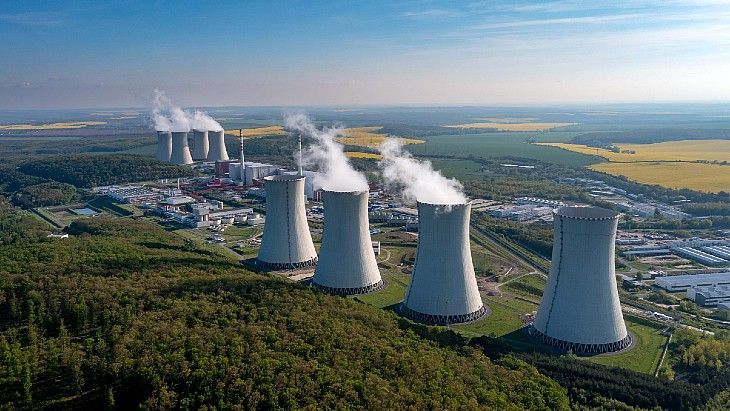
Major producers – notably Slovenské elektrárne, a. s. (Mochovce and Bohunice nuclear, hydro and combined-cycle gas plants) and larger independent producers with dispatchable resources.
OKTE, a. s. – the short-term electricity market operator and imbalance settlement operator; without it, there is no flexibility market on which much of demand management is traded today.
Flexibility aggregators and large industrial consumers – Slovnaft, U. S. Steel Košice, Duslo Šaľa, ZSNP/Slovalco, cement plants, paper mills, data centres. Some of them have contracts to provide ancillary services and, in essence, "sell" SEPS the ability to reduce their consumption on command.
U. S. Steel is a good example: a single steelworks can "shed" load in tens or even hundreds of MW – a regulating resource for the dispatcher that cannot be built in a year or two.
What makes this service different
Demand management is not just about tripping breakers. It is a combination of legislation, technology, commerce and the human factor, which must play out in real time:
A physical constraint. The electricity system must be balanced between generation and consumption second by second. A frequency deviation of 200 mHz is already a drama for the dispatcher.
Cyber exposure. Today's demand management runs through SCADA systems, IEC 60870-5-104, DLMS/COSEM on smart meters, and increasingly through aggregators' cloud platforms. Each of these channels is a potential attack vector – and attacks such as Industroyer (Ukraine 2016) or Industroyer2 (2022) have shown that this is a very real risk.
A market dimension. Part of the flexibility is now procured on the day-ahead and intraday markets, part through ancillary services (aFRR, mFRR, FCR). A failure of a market mechanism (e.g. an outage of the PICASSO or MARI platforms, to which Slovakia is connected) is just as much a risk as a line outage.
Regulatory complexity. The operator must simultaneously meet the requirements of ÚRSO (the Regulatory Office for Network Industries), the National Security Authority (NBÚ), the Ministry of Economy, ENTSO-E network codes (SO GL, EB GL) and, since 2024/2025, also the NIS2 and CER directives.
Social and political sensitivity. Controlled demand reduction (so-called "regulation stages" 1 to 5 under the Ministry of Economy decree) is politically extremely sensitive – turning off people's lights in winter is the last thing any government wants to do.
Risks that never sleep
Cascading failure – the classic case: the loss of a large unit (e.g. 500 MW at Mochovce) at a time of low reserves can trigger a chain reaction if demand management does not respond within seconds.
Cyber attack via the supply chain – firmware of smart meters, RTU units in substations, VPNs of maintenance suppliers.
Extreme weather – so-called Dunkelflaute (long periods of no wind and overcast skies) combined with frost can push Slovak consumption above 4,300 MW while simultaneously collapsing renewable output in neighbouring countries.
Human factor and insider threat – the dispatcher holds tools that can cause billions of euros in damage.
Regulatory uncertainty – the rapid growth of prosumers, battery storage and EV charging stations is changing the shape of the load faster than regulations can be updated.
The Critical Infrastructure Association of the Slovak Republic: why these players belong there
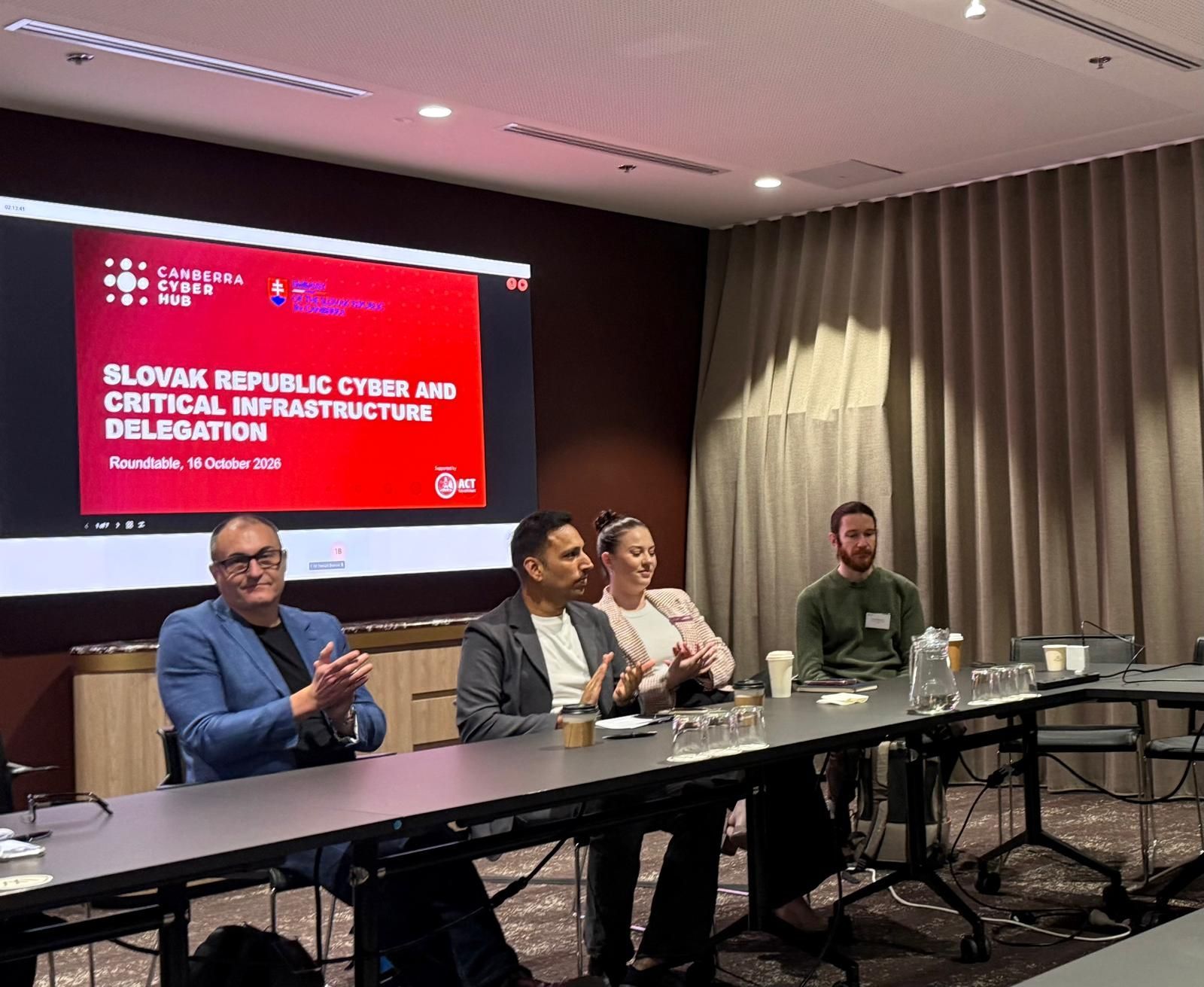
The Critical Infrastructure Association of the Slovak Republic (AKI SR) is a platform that brings together operators of essential services and critical infrastructure elements across sectors – energy, transport, finance, healthcare, IT, water management. For entities providing electricity demand management, membership makes practical sense for several reasons:
- A common voice vis-à-vis the state. Commenting on legislation (the Critical Infrastructure Act, the Cybersecurity Act, the Energy Act) is more effective when it reflects a consolidated position of the sector rather than that of each company separately.
- Sharing of threats and incidents in a trusted environment (a "trust circle") – what companies cannot say through official channels, they can share in working groups.
- Access to best practice from other sectors – banks, for instance, are a generation ahead in continuity management compared to energy, while energy is ahead in OT security.
- Professional training and exercises – Blackout, Cyber Europe, national exercises such as SK CYBER SEC.
- Contacts with foreign associations (e.g. EE-ISAC, ENISA working groups).
A few figures worth remembering
- Slovakia's peak load in recent winters has been around 4,200 – 4,400 MW, while the minimum on a summer Sunday drops below 2,400 MW.
- Ripple control (HDO – hromadné diaľkové ovládanie) – a 20th-century Slovak invention – still controls on the order of hundreds of thousands of off-take points (primarily storage heating and water heaters) and is a cheap demand-response tool that other countries envy us.
- The Value of Lost Load (VoLL) in EU models ranges between €8,000 and €25,000 per MWh; a single hour of a large-scale blackout in Slovakia would therefore mean damages in the hundreds of millions of euros.
- A frequency deviation of -800 mHz triggers automatic under-frequency load shedding – that is, a hard disconnection of some consumers without warning. This last occurred in the wider region on 8 January 2021.
- The economics of the sector: electricity accounts for low single-digit percentages of Slovak GDP, but it is the enabler of roughly 100 % of the rest of the economy.
In lieu of a conclusion
Electricity demand management is one of those services it is best not to hear about. As long as it works, no one asks who pays for it, who regulates it, or who is responsible for it. The moment it stops working, even for an hour, everyone asks – and the answer must be prepared long in advance. That is why it makes sense that the state has designated it an essential service, why it makes sense that its operators are critical entities, and why it makes sense that they sit at the same table within AKI SR.
In the next instalment of the series, we will look at another of the essential services, because critical infrastructure is not a single thing but the interplay of dozens of quiet pillars – and it is high time we started talking about them out loud.
he body content of your post goes here. To edit this text, click on it and delete this default text and start typing your own or paste your own from a different source.