Heat as a Critical Service: Where the Real Resilience of District Heating Systems Begins
District heating and cooling are an important part of the energy infrastructure of cities and municipalities. Their role is not limited to providing thermal comfort; they create stable conditions for the functioning of households, public institutions, industry and other facilities. As energy systems become increasingly technologically complex, the importance of their reliability, preparedness and ability to respond to operational disruptions is also growing.
As part of the Critical Infrastructure Association’s series on essential services under Act No. 367/2024 Coll., this article focuses on the provision of district heating or district cooling.
Who does this essential service concern?
Act No. 367/2024 Coll. classifies this essential service under Annex 1 within the Energy sector, specifically the District Heating and Cooling subsector. Annex 1 identifies the entities relevant to this essential service as heat producers, suppliers and customers as defined by specific legislation. The relevant legislation is Act No. 657/2004 Coll. on Thermal Energy.
It is important, however, to distinguish between entities falling within this scope and the actual status of a critical entity. Not every heat producer, supplier or customer is automatically a critical entity. A critical entity is identified through the procedure established by Act No. 367/2024 Coll.
The scale revealed by the numbers
The importance of this essential service can be illustrated by the scale of thermal energy consumption in Slovakia. According to data from the Regulatory Office for Network Industries, total heat deliveries in Slovakia reached 11,594 GWh in 2024. Of this, 4,139 GWh was delivered to residential buildings, 2,853 GWh to non-residential buildings and 4,602 GWh was used for technological purposes.
The scale is even more apparent when looking at households. According to an IHA analysis, approximately 60% of apartment buildings are connected to district heating systems, compared with approximately 2% of detached houses.
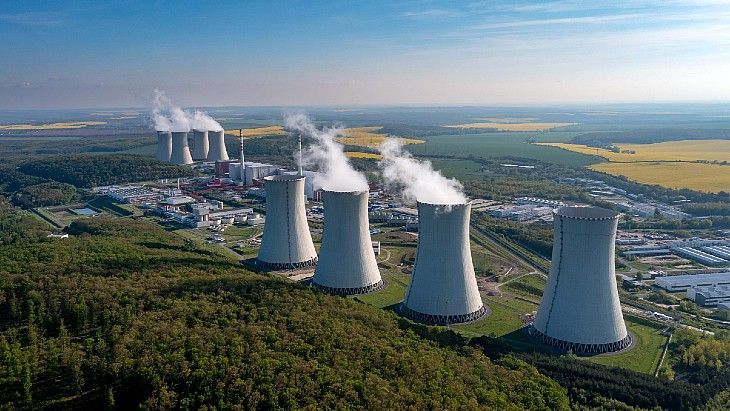
The scale of the system is also illustrated by MH Teplárenský holding. Its six district heating companies provide thermal comfort to approximately 320,000 households and around one million people. They produce approximately 2,600 GWh of heat and 650 GWh of electricity annually.
These figures show that this is far from a marginal energy service. It is infrastructure on which the day-to-day functioning of cities depends to a significant extent.
A district heating system is more than a heat source
When assessing resilience, it is essential to look at the entire technological process.
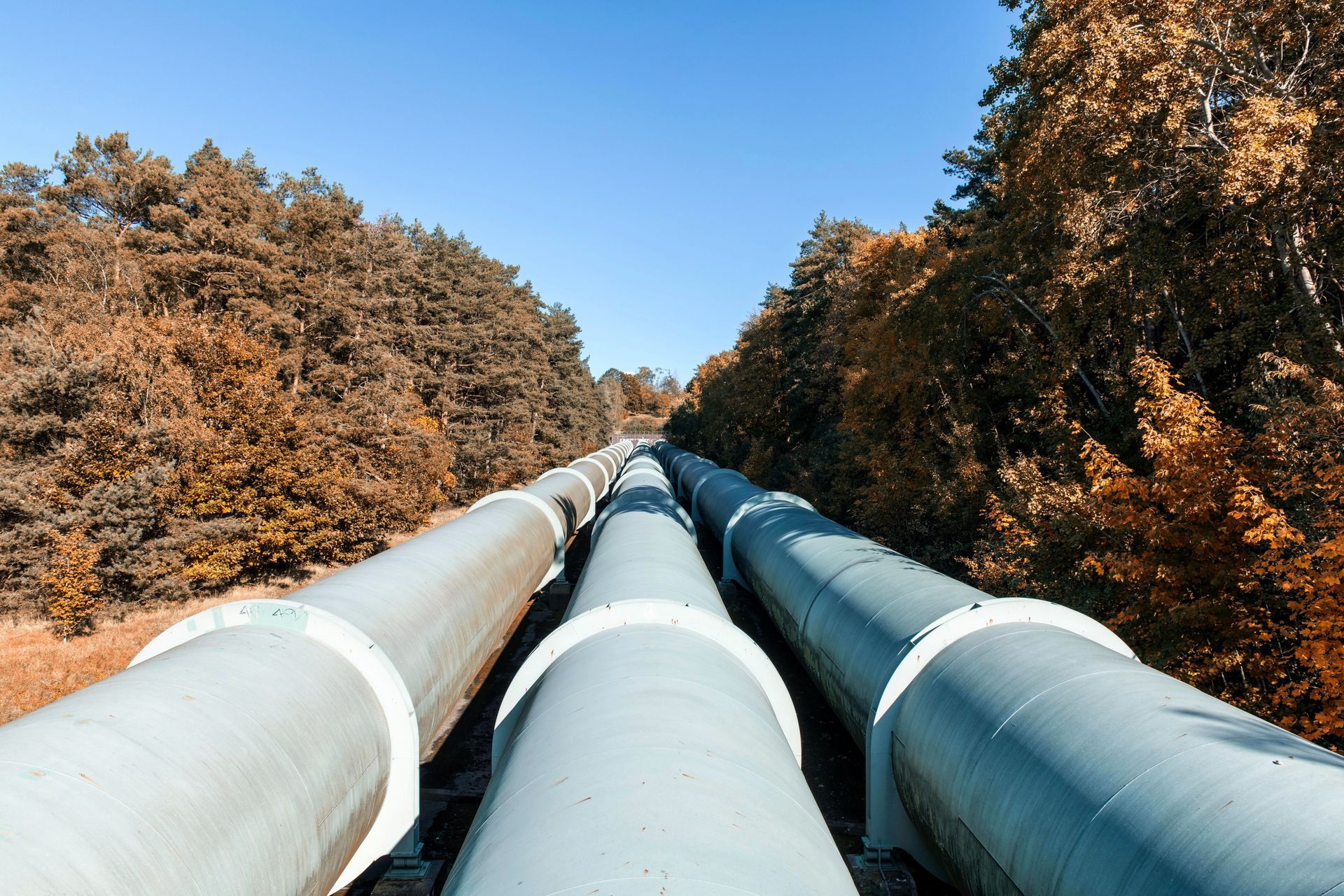
Heat production is only one part of the system. The provision of the service also depends on the distribution network, heat transfer stations, pumping and control equipment, metering, automated control systems and other technologies.
The system also relies on supplies of fuel, electricity, water, technological components, spare parts and maintenance services. This complexity creates one of the major challenges for operational security and continuity.
A disruption does not necessarily have to originate directly at a heating plant. Any part of the system may become a critical point if the service cannot be provided without it.
A risk that changes with the season
Thermal energy has a specific characteristic that is not present to the same extent in many other infrastructures: the impact of an incident can depend significantly on when it occurs.
An outage during mild weather may have completely different consequences from the same incident occurring during a prolonged period of low temperatures.
This also matters when planning operational continuity. It is not enough to know that a backup solution exists. It is important to understand its capacity, the time required to activate it and, above all, how long it can maintain the service during an extensive outage.
The supply chain may be the greatest challenge
The modernisation of district heating systems brings new technologies and more efficient solutions. At the same time, however, it can create new dependencies on specialised manufacturers and suppliers.
A critical component does not necessarily have to be a large piece of equipment. It may be a specific type of pump, control element, control system or another component that cannot be quickly replaced.
When assessing resilience, it is therefore important to understand not only the main technologies but also the availability time of spare parts, alternative suppliers and maintenance capacities.
Digitalisation is changing the nature of risk
District heating systems are becoming increasingly automated. Remote monitoring, smart metering, automated control systems and centralised management improve operational efficiency.
At the same time, however, they mean that technological infrastructure is becoming increasingly dependent on information and communication systems. A cyber incident therefore does not necessarily mean only a loss of data. In the case of industrial control systems, it may potentially affect the technological process itself, including the production or distribution of heat.
For operators, it is therefore important to assess IT and OT environments in conjunction and to pay attention to the security of remote access, network segmentation, backup control mechanisms and the ability to intervene manually in the event of automated system failures.
What about district cooling?
Although attention in Slovakia naturally focuses primarily on heating, the importance of district cooling may gradually increase.
Cooling is no longer simply a matter of thermal comfort. For some facilities, it is an essential condition for the operation of technological equipment. This applies, for example, to data centres, healthcare facilities, technological operations and buildings with a high concentration of electronic systems.
As the economy becomes increasingly digitalised, the reliability of cooling systems is therefore gaining a new dimension.
Resilience begins with knowing the critical points
For this essential service, it is therefore important to focus on specific questions:
* Which systems and components are indispensable for operations?
* How long can the system operate following the loss of its main source?
* Which supplies or services are necessary for restarting the system?
* Is there an alternative supplier for a critical component?
* How would the consequences of an incident change during peak heating demand?
* And finally: What would be the impact of a loss of heating or cooling on other critical services?
The answers to these questions make it possible to turn general security measures into concrete preparedness.
The role of the Critical Infrastructure Association of the Slovak Republic
The Critical Infrastructure Association of the Slovak Republic sees particular value in independently connecting technical, security and operational perspectives in this area.
We consider the following areas particularly important:
* identifying critical dependencies between thermal energy and other sectors,
* analysing critical supply chains,
* identifying potential single points of failure,
* conducting scenario analyses of extensive and prolonged outages,
* connecting energy and cybersecurity experts,
* sharing experience among operators,
* and supporting joint exercises focused on restoring the provision of essential services.
The regional perspective is also important. District heating systems are often closely connected to a particular city or geographical area. Their resilience therefore cannot be assessed separately from the resilience of the territory they serve.
Heat is more than a commodity
The figures demonstrate the scale of this service. The technological context, in turn, reveals its vulnerabilities.
In 2024, total heat deliveries in Slovakia amounted to 11,594 GWh. At the same time, a single major Slovak district heating holding provides heat to approximately 320,000 households and one million people.
Behind these figures are individual cities, hospitals, schools, industrial companies, office buildings and households.
For district heating and cooling, therefore, the question is not simply how much energy a system can produce. What matters is whether it can continue delivering that energy when its operation is exposed to extraordinary stress or disruption.
And it is precisely the ability to maintain continuity of this service under conditions of disruption that transforms a technically functioning system into resilient critical infrastructure.