AKI SR Held Talks with the Leadership of the Ministry of Interior of the Slovak Republic on Further Strengthening the Resilience of Critical Infrastructure
On Monday, 31 August 2026, a working meeting took place at the Ministry of Interior of the Slovak Republic with State Secretary of the Ministry of Interior Patrik Krauspe, Director General of the Crisis Management Section Jaroslav Kmeť, Naďa Trelová Sonogová from the Department of International Cooperation of the Ministry of Interior, and representatives of the Critical Infrastructure Association of the Slovak Republic (AKI SR).
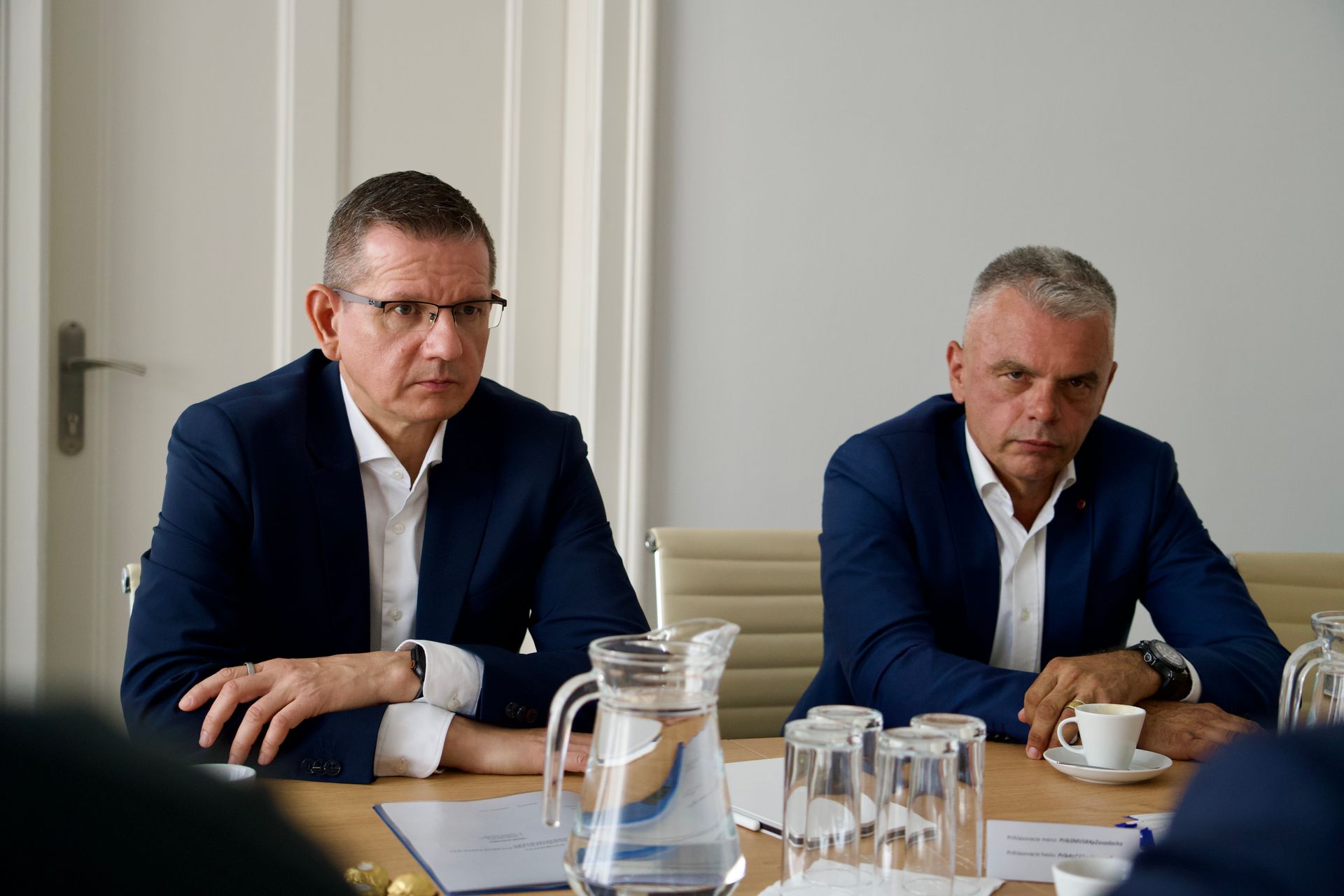
Attending on behalf of AKI SR were President Tibor Straka, Chair of the Supervisory Board Matej Michalko, and Executive Director Stella Bulejková. The Slovak Chamber of Commerce and Industry was also invited; its president Peter Mihók attended in person. Eva Sventeková, Dean of the Faculty of Security Engineering at the University of Žilina, sent her apologies for the meeting due to urgent work commitments.
The meeting followed up on the Memorandum of Cooperation between the Ministry of Interior of the Slovak Republic and AKI SR, signed on 6 October 2025. The discussion focused on concrete possibilities for further cooperation to increase the resilience of critical infrastructure and ensure continuity in the provision of essential services.
Knowing not only the critical entity but also its dependencies
One significant area for further cooperation will be identifying vulnerabilities in supply chains. A critical entity may be well prepared for its own risks, but its resilience can be strongly affected by dependence on a supplier of key technology, components, software, or services.
Particular attention is required for dependencies on suppliers from third countries outside the European Union. The risk may not be limited to a direct supplier relationship. It is also important to know other links in the chain and the points where a failure or disruption of deliveries could threaten the provision of an essential service. Assessing such risks requires specialist expertise, analytical capacity, and knowledge that connects technical, economic, security, and strategic contexts.
Professional support for critical infrastructure
The development of professional capacities was one of the topics of the meeting. In Slovakia there is a growing need to systemically connect the expertise of public administration, critical entities, the business sector, academia, and other specialist institutions.
In this context, the parties involved are preparing steps toward creating a specialized professional center for critical infrastructure that could provide expert and analytical support in risk identification, dependency assessment, and finding solutions to strengthen resilience. Such a center could also create space to develop strategic professional capacities and generate new qualified jobs in Slovakia.
“Resilience of critical infrastructure is not only about what we have domestically, but also about whom we depend on. That is why we need high-quality expertise and professional capacity to help us identify and reduce those dependencies in time,” said AKI SR President Tibor Straka.
The role of the business and academic community
An important partner in this effort is the Slovak Chamber of Commerce and Industry (SOPK), with which AKI SR has a cooperation memorandum. SOPK has extensive experience and contacts within the business community and can bring a practical corporate perspective on risks and dependencies in supply chains. Business entities have detailed knowledge of their supplier relationships, technological dependencies, and the risks that arise in supply chains. Their experience can therefore be an important source of information when identifying strategic dependencies and seeking ways to reduce them.
The planned activities also include the Faculty of Security Engineering at the University of Žilina, which can contribute its research capacities and the education of new specialists in the field of critical infrastructure.
The meeting participants agreed on further concrete steps of cooperation aimed at developing professional support structures and practical tools to enhance the resilience of critical infrastructure and ensure the continuity of essential services in the Slovak Republic.