Expert Statement of the Critical Infrastructure Association of the Slovak Republic (AKI SR) on Act No. 318/2025 Coll. and the implementation of the Cyber Resilience Act (CRA)

25. novembra 2025

The Critical Infrastructure Association of the Slovak Republic considers the adoption of Act No. 318/2025 Coll. to be a fundamental step in the field of cybersecurity of the Slovak Republic. This legal regulation systematically implements the European Cyber Resilience Act for the first time and regulates the way in which digital products – from software, through IoT devices to specialized technologies used in industry – will be placed on the market and controlled from the perspective of cyber resilience.

The Act also changes the position of the National Security Authority, which becomes the market surveillance authority for products with digital elements. This is a significant strengthening of the state's capacities in an area where a clear and unambiguous competence framework has been lacking until now. The NSA will now be able to verify the security properties of digital products, order manufacturers or distributors to eliminate identified deficiencies, if necessary, prohibit the placement of non-compliant technologies on the market and intervene also in the online environment against offers that threaten user security. This is a response to the long-term trend where an increasing number of digital components - including those that later end up in critical systems - are purchased through global online platforms without sufficient control of origin or quality.

The Cyber Resilience Act introduces extensive and previously non-existent obligations for manufacturers and importers of digital products. The manufacturer will bear responsibility for product security throughout its entire life cycle, will have to ensure vulnerability management processes, provide corrective updates, prepare technical documentation for conformity and transparently inform about security incidents. The amendment to the Act translates these rules into the Slovak legal framework and creates a basis for their practical enforcement.

An extremely important innovation is also the digital product passport, which is intended to provide an overview of security properties, technical specifications, compliance with regulations and update history. For critical infrastructure operators, this means a much higher level of transparency in relation to the technologies they use in their key systems. From a long-term perspective, this will also support better risk management and more efficient identification of weaknesses in supply chains.

From the perspective of energy security, transport, healthcare, manufacturing sectors or telecommunications networks, this is a legislative step that clearly moves Slovakia closer to modern European standards of cyber resilience. Critical infrastructure today is exposed to highly sophisticated attacks that often exploit vulnerabilities in common commercial products. While until now it was possible to place on the market even products with minimal security standards, the new legal framework will enable the state to effectively stop such technologies as soon as they appear on the Slovak market.

The Critical Infrastructure Association of the Slovak Republic considers this legislative regulation to be a step in the right direction. At the same time, we perceive the need for the state to prepare clear methodological guidelines for critical infrastructure operators, public authorities and companies that will have to fulfil obligations under the CRA. The introduction of the regulation will also involve the need to strengthen the expert capacities of the NSA, as well as better coordination between individual state authorities.

AKI SR is ready to actively cooperate with the NSA, ministries and the expert community in implementing this legal regulation into practice. We believe that the new framework will contribute to increasing the security of digital technologies used in Slovakia and will strengthen the protection of systems that are necessary for the functioning of society, the economy and the state.

1. mája 2026
Asociácia kritickej infraštruktúry SR (ďalej len „asociácia") považuje za potrebné reagovať na článok publikovaný v Denníku E, ktorý vo viacerých bodoch nepresne interpretuje činnosť asociácie, jej členskú základňu, ako aj povahu projektov realizovaných niektorými členskými subjektmi. Nižšie uvádzame vecné stanovisko k jednotlivým tvrdeniam.
30. apríla 2026
The area of critical infrastructure in the Slovak Republic is regulated by Act No. 367/2024 Coll. on Critical Infrastructure and on the Amendment and Supplementation of Certain Acts, which defines the individual sectors, sub-sectors and essential services necessary for the functioning of the state. The Critical Infrastructure Association of the Slovak Republic gradually presents the individual sectors with the aim of bringing closer their importance, their functioning and their impacts on the everyday life of society. This time we focus on the finance sector.
30. apríla 2026
Oblasť kritickej infraštruktúry v Slovenskej republike upravuje zákon č. 367/2024 Z. z. o kritickej infraštruktúre a o zmene a doplnení niektorých zákonov, ktorý definuje jednotlivé sektory, podsektory a základné služby nevyhnutné pre fungovanie štátu. Asociácia kritickej infraštruktúry Slovenskej republiky postupne predstavuje jednotlivé sektory s cieľom priblížiť ich význam, fungovanie a dopady na každodenný život spoločnosti. Tentokrát sa zameriame na sektor financií .
29. apríla 2026
On 17 April 2026, a trial began at the District Court in Vilnius that is shifting the European debate on the protection of critical infrastructure from the technical level to a very concrete one. Five men are charged with sending, in July 2024, in cooperation with the Special Tasks Department of the Russian military intelligence service GRU, incendiary parcels via DHL and DPD from Vilnius to the air hub in Leipzig, to Poland and to the United Kingdom. The head of the German counter-intelligence service BfV stated that only a flight delay prevented an in-flight detonation that could have destroyed a cargo aircraft. 
29. apríla 2026
Na Okresnom súde vo Vilniuse sa 17. apríla 2026 začal proces, ktorý posúva európsku diskusiu o ochrane kritickej infraštruktúry z roviny technickej do roviny veľmi konkrétnej. Päť mužov je obvinených z toho, že v júli 2024 v spolupráci s Oddelením špeciálnych úloh ruskej vojenskej spravodajskej služby GRU posielali zápalné zásielky cez DHL a DPD z Vilniusu do leteckého uzla v Lipsku, do Poľska a do Veľkej Británie. Šéf nemeckej kontrarozviedky BfV uviedol, že len omeškanie letu zabránilo detonácii vo vzduchu, ktorá mohla zničiť dopravné lietadlo.
28. apríla 2026
The KYBER2026 conference of the National Security Authority and SK-CERT, held on 27 and 28 April 2026 at Hotel Sitno Vyhne, confirmed what operators of essential services and critical entities had already suspected since the beginning of the year. 2026 is not a year of preparation — it is a year of demonstrable functionality. At the centre stands Regulation (EU) 2024/2847 of the European Parliament and of the Council on cyber resilience, which reaches its first hard milestone on 11 September 2026: mandatory reporting of actively exploited vulnerabilities and significant incidents through ENISA's Single Reporting Platform.
28. apríla 2026
Konferencia KYBER2026 Národného bezpečnostného úradu a SK-CERT, ktorá sa konala 27. a 28. apríla 2026 v hoteli Sitno Vyhne, potvrdila to, čo prevádzkovatelia základných služieb a kritických subjektov tušili už od začiatku roka. Rok 2026 nie je rokom prípravy, ale rokom preukázateľnej funkčnosti. V centre stojí nariadenie Európskeho parlamentu a Rady číslo 2024/2847 o kybernetickej odolnosti, ktoré dosiahne 11. septembra 2026 prvý ostrý míľnik, povinné hlásenie aktívne zneužívaných zraniteľností a závažných incidentov cez Single Reporting Platform agentúry ENISA.
24. apríla 2026
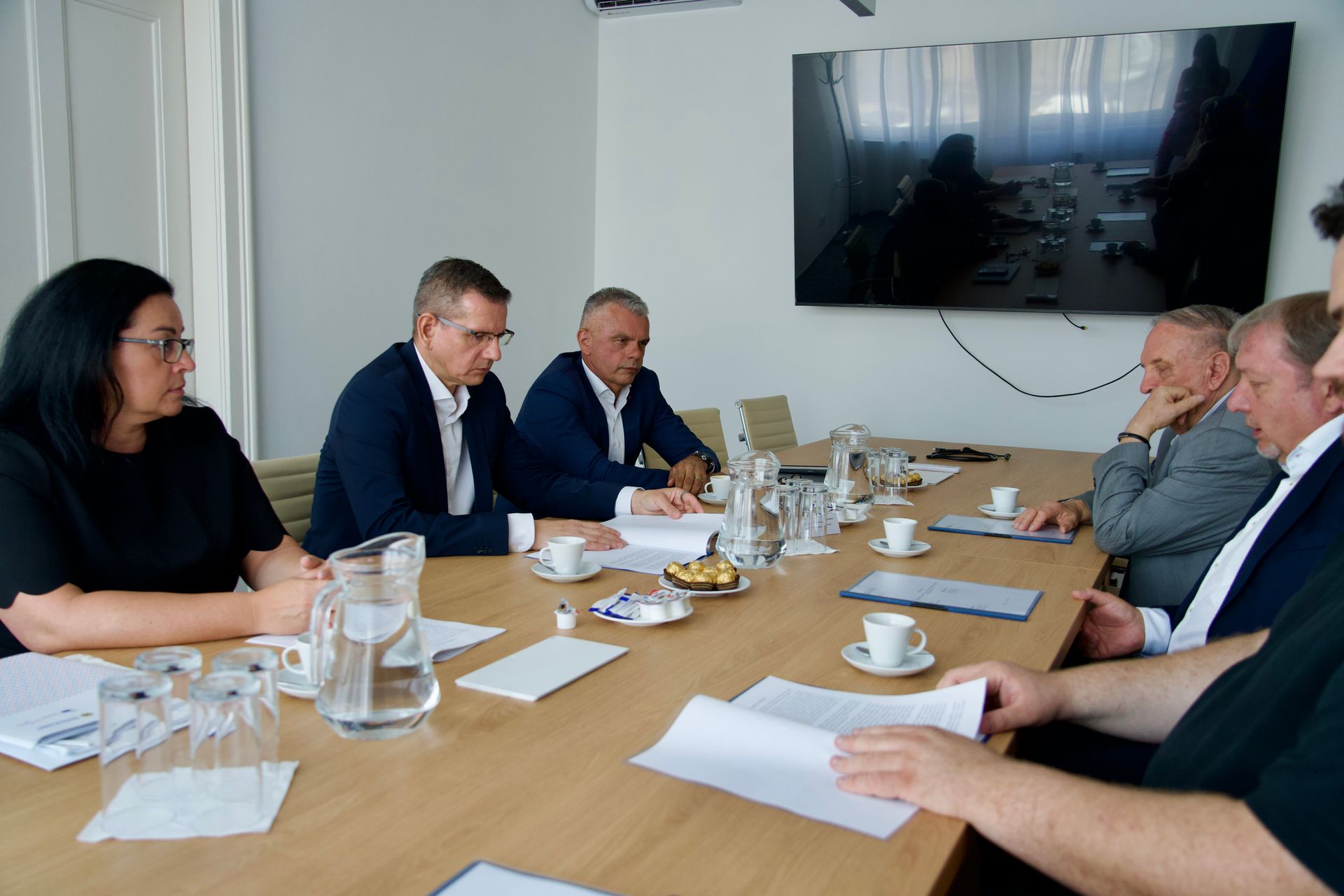
The Critical Infrastructure Association of the Slovak Republic (AKI SR) and Slovak Investment Holding, a. s. concluded a memorandum of cooperation on 23 April 2026, the aim of which is to create a framework for the support of investments and the financing of projects in the field of critical infrastructure in Slovakia. The memorandum confirms the shared interest of both parties in developing strategic, developmental and innovation projects with a focus on increasing the resilience of critical infrastructure and securing essential services. The cooperation will concentrate in particular on the identification of suitable projects, the exchange of expert knowledge, as well as the interconnection of public and private sources of financing. An important part of the cooperation is also the use of expert capacities and practical experience in the preparation and implementation of projects, in particular in the areas of infrastructure and innovation. “We see room for projects that will have a long-term impact and, at the same time, financial sustainability. In areas of public interest, such as critical infrastructure or innovation, we can bring knowledge of the environment, the identification of projects and the interconnection of partners, so that high-quality and feasible solutions come into being,” stated Tibor Straka, President of AKI SR. According to his words, it is crucial that the cooperation brings concrete results: “It is important for us that this cooperation is sustainable in the long term and brings measurable results that will have a real benefit for Slovak critical infrastructure.” At the same time, the memorandum creates space for systematic expert cooperation, consultations and further joint activities aimed at the support of investments and the development of critical infrastructure. Both parties declare their interest in actively participating in projects that will contribute to the modernisation of infrastructure, the more efficient use of resources and the strengthening of the investment environment in Slovakia.
24. apríla 2026
Asociácia kritickej infraštruktúry Slovenskej republiky (AKI SR) a Slovak Investment Holding, a. s. uzavreli 23. apríla 2026 memorandum o spolupráci, ktorého cieľom je vytvoriť rámec pre podporu investícií a financovanie projektov v oblasti kritickej infraštruktúry na Slovensku. Memorandum potvrdzuje spoločný záujem oboch strán rozvíjať strategické, rozvojové a inovačné projekty so zameraním na zvýšenie odolnosti kritickej infraštruktúry a zabezpečenie základných služieb. Spolupráca sa bude sústreďovať najmä na identifikáciu vhodných projektov, výmenu odborných poznatkov, ako aj prepájanie verejných a súkromných zdrojov financovania. Dôležitou súčasťou spolupráce je aj využitie odborných kapacít a praktických skúseností pri príprave a realizácii projektov, najmä v oblastiach infraštruktúry a inovácií. „ Vidíme priestor pre projekty, ktoré budú mať dlhodobý dopad a zároveň finančnú udržateľnosť. V oblastiach verejného záujmu, ako sú kritická infraštruktúra či inovácie, vieme priniesť znalosť prostredia, identifikáciu projektov a prepájanie partnerov tak, aby vznikali kvalitné a realizovateľné riešenia,“ uviedol prezident AKI SR Tibor Straka. Podľa jeho slov je kľúčové, aby spolupráca prinášala konkrétne výsledky: „Je pre nás dôležité, aby táto spolupráca bola dlhodobo udržateľná a prinášala merateľné výsledky, ktoré budú mať reálny prínos pre slovenskú kritickú infraštruktúru.“  Memorandum zároveň vytvára priestor pre systematickú odbornú spoluprácu, konzultácie a ďalšie spoločné aktivity zamerané na podporu investícií a rozvoj kritickej infraštruktúry. Obe strany deklarujú záujem aktívne sa podieľať na projektoch, ktoré prispejú k modernizácii infraštruktúry, efektívnejšiemu využívaniu zdrojov a posilneniu investičného prostredia na Slovensku.
22. apríla 2026
A ransomware attack on ChipSoft, the supplier of the electronic health records system used by approximately 70 to 80 percent of Dutch hospitals, paralysed a substantial part of the national healthcare system within a matter of hours. The event reaches far beyond the borders of the Netherlands. It confirms that the concentration of sensitive infrastructure in the hands of a single software supplier is becoming a systemic vulnerability of critical infrastructure.