Mochovce 4: A Significant Contribution to Slovakia’s Energy Security. The Resilience of the Entire System Will Also Be Crucial
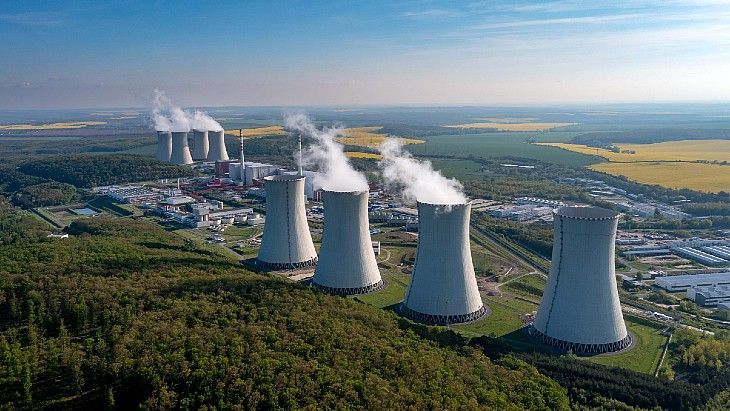
The connection of the fourth unit of the Mochovce Nuclear Power Plant to the electricity grid represents a significant step towards strengthening domestic electricity generation. From a critical infrastructure perspective, the importance lies not only in the additional generating capacity, but also in the broader implications: security of supply, the dependence of essential services on electricity, and preparedness for situations in which electricity supplies are disrupted.
The fourth unit of Mochovce was connected to the Slovak electricity grid for the first time on 15 October 2026 at 20:41. The first of its two turbogenerators was synchronised with the grid while the reactor was operating at 20% power. With an installed electrical capacity of 471 MW, the unit is expected to generate approximately 3.5 TWh of electricity annually once it reaches full operation, equivalent to around 13% of Slovakia’s current annual electricity consumption.
The first electricity supplies mark an important stage in the power plant’s commissioning process, but they do not mean that the entire process has been completed. Further prescribed tests must be carried out, the second turbogenerator must be connected, and output must be gradually increased under the supervision of the Nuclear Regulatory Authority of the Slovak Republic. Only after these stages have been successfully completed can the unit transition to full operation.
Energy Security Is Essential for the Operation of Critical Services
Electricity is a fundamental input for the operation of healthcare, drinking water supply, electronic communications, transport, data centres, industry and public administration. A power outage therefore does not necessarily remain confined to the energy sector. It can trigger a chain of subsequent disruptions affecting the availability of other essential services.
These interdependencies are particularly important from a critical infrastructure perspective. An operator may have its own backup power supply, but its functionality also depends on fuel availability, maintenance capacity, spare parts, communication systems and personnel. During a large-scale outage, the simultaneous unavailability of several services on which operations depend can also become a significant problem.
“The connection of the fourth Mochovce unit represents a significant contribution to Slovakia’s energy security. From a critical infrastructure perspective, however, we must assess not only the availability of generating capacity, but also the ability of the entire system to ensure electricity supplies and cope with potential disruptions. Critical entities must therefore understand their dependence on external supplies, verify their backup solutions and have procedures in place to maintain essential services or restore them promptly,” says Tibor Straka, President of the Critical Infrastructure Association of the Slovak Republic (AKI SR).
A New Power Source Does Not Eliminate the Need to Prepare for Outages
Increased installed domestic generating capacity strengthens the conditions for meeting electricity demand and reduces pressure to secure supplies from other sources. However, it should not be confused with a guarantee of uninterrupted electricity supply to every consumer. The reliability of supply also depends on the transmission and distribution networks, the availability of other generating sources, operating reserves and the ability to manage faults and emergency situations.
For operators of critical entities, this means regularly assessing energy-related risks and verifying whether the measures in place are adequate for realistic disruption scenarios. Particular attention should be paid to:
* identifying equipment and processes whose failure would jeopardise the provision of an essential service;
* verifying the capacity and operational readiness of backup power sources, including fuel availability and maintenance support;
* assessing dependencies on external suppliers, telecommunications networks and digital control systems;
* testing procedures for power outages and coordination with energy suppliers and other relevant entities;
* planning operational recovery with due regard to the possible simultaneous disruption of several services.
Particular attention must be paid to the link between energy security and cybersecurity. The control and communication systems used by energy facilities and electricity consumers may be exposed to technical failures and cyber threats. A disruption affecting one component can therefore impact the operation of other parts of the system. Operators must consequently coordinate physical security, cybersecurity and business continuity measures.
What Does This Mean for Slovakia’s Resilience?
The fourth Mochovce unit expands domestic generating capacity with a significant low-emission energy source. Its contribution should also be viewed in the context of future growth in electricity demand driven by the electrification of industry and transport, as well as the development of digital technologies.
From a critical infrastructure perspective, however, a fundamental question remains: how can we ensure that essential services continue to operate even when electricity supplies are severely disrupted or several interdependent systems fail simultaneously?
Answering this question requires a coordinated approach involving the state, energy companies and operators of critical entities. Understanding risks within an organisation’s own operations is not enough. It is also necessary to understand dependencies on other services, test preparedness for crisis scenarios and establish the conditions for rapid operational recovery.
The Critical Infrastructure Association of the Slovak Republic considers the development of stable domestic energy sources an important component of national security. At the same time, it emphasises that energy security must be assessed in the context of the functioning of the entire critical infrastructure system. The combination of reliable energy supplies, technical safeguards and operational preparedness ultimately determines the extent to which Slovakia can maintain essential services even in the event of major disruptions.