When Food Is More Than Just Retail: Why Tesco Is Also a Critical Infrastructure Issue
Information about a possible entry of the Slovak and Czech governments into the ownership of the Tesco retail chain raises a broader question than simply the future of one retail company.
According to information published by Marker on 7 October, both governments are considering acquiring Tesco’s operations in the Czech Republic and Slovakia. According to the newspaper’s sources, the Slovak part could be worth approximately €400 million. However, no transaction has been decided. The Slovak Antimonopoly Office has also pointed out that these are media reports and that, at the time of its latest statement, it had not been notified of any concentration related to Tesco.
From a critical infrastructure perspective, however, another question is more interesting: What role does a large-scale food distribution system play in the functioning of the state, and what would a serious disruption of such a system mean?
The answer is linked to how we understand food security today. It is no longer simply about how much food we are able to produce. It is also about whether the entire system can continue to function in a crisis and whether alternatives exist when one part of the system fails.
Why does this matter?
Food is not merely part of everyday consumption. It is one of the basic needs of the population, and its availability is a prerequisite for a functioning society. Slovakia’s Act No. 367/2024 Coll. on Critical Infrastructure therefore includes food among the critical infrastructure sectors. The legislation does not focus solely on food production. It also covers parts of the food supply chain and wholesale distribution.
There is a reason for this. If the supply of food is seriously disrupted, the consequences can quickly extend far beyond the food sector itself. A power outage, disruption to transport, telecommunications or information systems can affect the ability to get food to consumers.
Food security therefore cannot be separated from the security of the infrastructure that enables food to be produced, stored and distributed.
When looking at a major retail chain, we also need to look beyond its stores
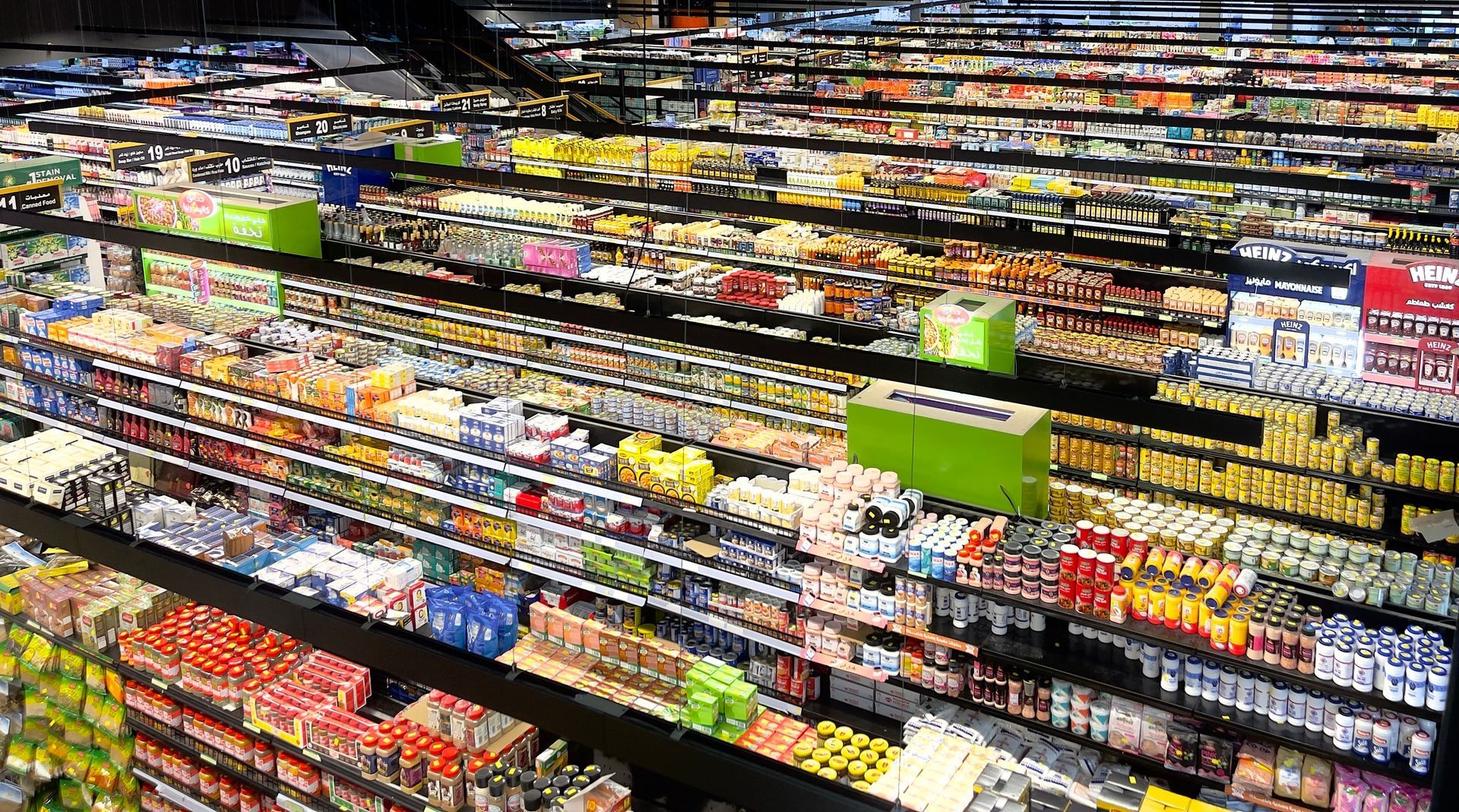
Tesco is one of the largest players in the Slovak retail market. According to the company’s current figures, it operates 185 stores, three distribution centres and 18 petrol stations in Slovakia. The Slovak Antimonopoly Office also describes Tesco as one of the largest players in the Slovak retail market and ranks it third by revenue.
These figures, of course, do not mean that Tesco is automatically a critical entity under the law. That is determined through a specific identification process and according to statutory criteria. They do, however, demonstrate the company’s significance for the Slovak market. And that is precisely why, when considering its future, it is relevant to look at issues that go beyond ownership itself.
Ownership is not the only security criterion
If the state’s possible entry into Tesco’s ownership is actually considered, the discussion should not focus solely on the question of who will own the company. Domestic ownership may be significant from the state’s perspective. On its own, however, it does not guarantee the security of the system. It is equally important to know who the company depends on, what alternatives it has and how it can respond to a serious incident.
This may include foreign suppliers, technological systems, logistics capacities, energy inputs or services without which distribution could not operate.
These dependencies should be part of the strategic assessment of companies whose activities are important to the day-to-day functioning of society.
Food self-sufficiency is more than domestic production
This is also connected with a topic that is increasingly being discussed today: food self-sufficiency.
Strong domestic agricultural and food production is undoubtedly important. It reduces certain external dependencies and creates domestic capacity that can be used in times of crisis. However, self-sufficiency cannot mean that everything we need must be produced within Slovakia. Domestic production itself depends on energy, technology, fuel, spare parts, packaging materials and transport. If one of these inputs becomes unavailable, a problem can arise even when sufficient production capacity exists.
Food security is therefore not only a question of how much we can produce. It is also a question of how well we can manage our dependencies. This is an important distinction between self-sufficiency and genuine resilience of the food system.
Who are we dependent on?
This is where food security meets the issue of critical infrastructure.
Tibor Straka, President of the Critical Infrastructure Association of the Slovak Republic, puts it clearly: “The resilience of critical infrastructure is not only about what we have at home, but also about who we depend on. The same applies to food as it does to energy, strategic raw materials and technologies.”
For the state, it is therefore important to know not only its capacities, but also its dependencies. And, above all, to know which of them can be replaced in the event of a crisis.
The greatest vulnerability may lie between sectors
Food also demonstrates why critical infrastructure cannot be assessed solely sector by sector.
A distribution system may be well prepared, yet its operation depends on other services. A power outage can disable technology and equipment. A disruption to transport can restrict supplies. A cyberattack can take information systems needed to manage operations offline.
An incident can therefore originate entirely outside the food sector and still affect the availability of food. These interdependencies between sectors are precisely among the areas that require greater attention when protecting critical infrastructure.
What should the state know before a crisis occurs?
The state’s role is not to manage retail chains. It should, however, know where capacities that are important for supplying the population are located, what they depend on and what alternatives exist. This knowledge is also important when making decisions about strategic investments and changes in ownership.
The point is not for the state to own everything that is important. The point is for the state to know what is important — and to have solutions prepared in case part of the system stops functioning.
The role of the Critical Infrastructure Association of the Slovak Republic
This is precisely where the Critical Infrastructure Association of the Slovak Republic sees its role.
The Association does not replace the competences of the state. It is an independent professional platform that connects the public and private sectors in the field of critical infrastructure. Its role is to identify risks, dependencies and vulnerabilities and to support practical solutions that help critical entities prepare more effectively for crisis situations.
In the case of food, this means looking beyond a single company or sector and identifying points whose failure could have a wider impact.
Tesco could be a catalyst for a broader discussion
The debate about a possible sale of Tesco therefore does not have to be only a debate about the ownership of one retail chain. It could become a catalyst for a broader discussion about how well Slovakia understands its strategic dependencies in the food sector.
Do we have sufficient alternatives? Do we know which capacities are critical for supplying the population? Do we know what would happen if one of them were unavailable for an extended period? These questions matter regardless of who owns Tesco. Because in a crisis, the logo above the store will not be what matters most. What will matter is whether we are able to maintain the supply of food to the population.
And that is no longer simply a question of retail. It is a question of critical infrastructure, food security and the security of the state as a whole.