The Refinery as the Node Through Which Almost Every Litre of Fuel in Slovakia Passes
A series of expert articles by the Critical Infrastructure Association of the Slovak Republic on essential services under Annex No. 1 to Act No. 367/2024 Coll. on Critical Infrastructure
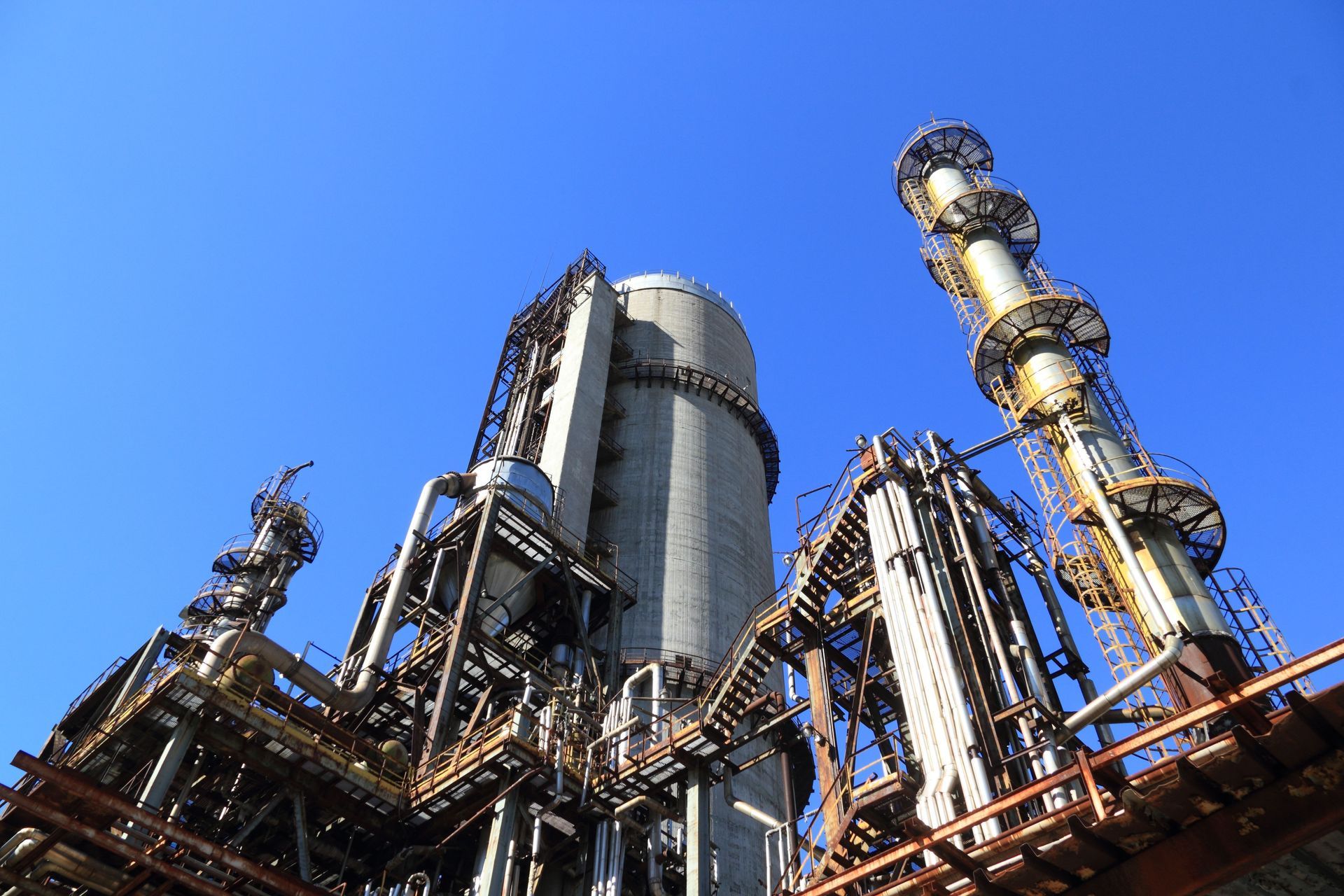
Having covered crude oil extraction and the operation of pipelines for the transport of oil and motor fuels, our series now moves to the link in the chain where raw material becomes product: crude oil refining and processing. This is where an abstract commodity traded on global exchanges turns into diesel in a tanker truck, petrol in a fuel tank, jet fuel at an airport, bitumen on a motorway and feedstock for petrochemicals. It is also the point at which the entire oil chain narrows into a single node.
Classification under the law
The essential service crude oil refining and processing falls under the Energy sector, Oil and petroleum products subsector. The central state administration authority for this service is the Ministry of Economy of the Slovak Republic.
For AKI SR, this classification also has a practical dimension: on 22 June 2026, the Ministry of Economy of the Slovak Republic and the Critical Infrastructure Association of the Slovak Republic signed a Memorandum of Cooperation — on behalf of the ministry by State Secretary Szabolcs Hodosy, and on behalf of the association by its President, Tibor Straka. The memorandum establishes a framework for expert cooperation in strengthening the resilience of critical entities, in the preparation of legislative proposals, in the exchange of knowledge and in disseminating proven practice. Oil refining is precisely the kind of topic such a framework was created for.
Who provides this service in Slovakia
The answer is unusually short — and for that very reason significant from a security perspective: there is only one crude oil refinery in the territory of the Slovak Republic — SLOVNAFT, a.s., a member of the Hungarian MOL Group. It is a refining and petrochemical complex processing 5.5 to 6 million tonnes of crude oil per year.
A single provider for a single essential service means, in the language of risk analysis, one thing: zero domestic substitutability. In the event of an outage, the issue is not redistributing the load among competitors, but immediate dependence on imports of finished fuels.
Figures worth remembering
Just how fragile this node is was demonstrated by the winter of 2026 better than any exercise could.
Following the interruption of crude oil supplies through the Druzhba pipeline in the Brody area of Ukraine, the Government of the Slovak Republic declared a state of oil emergency on 18 February 2026 and approved a loan of up to 250,000 tonnes of crude oil from the state material reserves to Slovnaft — roughly one month of the refinery's consumption — with an obligation to return it by the end of September 2026. In response to the outage, the refinery shut down one processing unit with a daily capacity of 8,500 tonnes and ran a second unit of the same capacity below full output. The alternative route — the Adria pipeline from the Croatian port of Omišalj — is operational, but transit fees on this route are five times higher than via Druzhba. At the same time, Slovnaft temporarily suspended diesel exports in order to give priority to the domestic market.
Several lessons follow. First, emergency reserves do work — but they are measured in weeks, not months. Second, the existence of an alternative route is not the same as its economic and technological usability: the refinery must be capable of processing a different crude. Slovnaft plans to complete the investments enabling the processing of non-Russian crude by the end of 2027. And third, restricting exports in favour of the domestic market is a legitimate crisis instrument — but one that immediately affects customers in neighbouring states.
Resilience is a cross-border issue.
What risks threaten this essential service
Input dependency. A refinery without crude oil is a cost item. The risk arises from a combination of damage to transport infrastructure, geopolitical interruption, sanctions regimes and the availability of a crude type suited to the specific technological configuration.
Technological rigidity. A refinery is designed for a particular feedstock quality. Changing the source is not an administrative act but an investment project with a horizon measured in years.
A single point of failure. A fire, an explosion, a failure of a key unit or a prolonged unplanned shutdown have no domestic substitute. Planned turnarounds are likewise periods of elevated risk.
Cyber and OT risks. A refinery's control systems are a typical environment in which IT and OT overlap. Compromising process control has not only a data impact, but a physical and safety one.
Physical and hybrid threats. Experience from the European energy sector shows that the target need not be the main plant. A substation, cooling system, pumping station or interconnecting pipeline is enough. To this must be added unauthorised flights of unmanned aerial vehicles over industrial sites.
Dependence on other services. A refinery needs electricity, gas, water, chemicals, catalysts, spare parts and qualified personnel. The loss of any one of these can halt production just as effectively as a shortage of crude.
Climate and environmental factors. Extreme heat, low river flows and cooling restrictions are no longer exceptional events but a recurring operating condition.
The human factor. An ageing generation of process engineers and a narrow supply of refinery-process specialists is a risk that materialises slowly — but permanently.
Supply chains: where resilience is built or lost
A refinery's resilience does not end at the perimeter fence. It is determined at the suppliers of catalysts, chemicals, pumps, valves, instrumentation and control equipment; at service and assembly firms; at hauliers; at IT and OT service providers; and at external maintenance contractors with physical access to the plant. Both the CER Directive and Act No. 367/2024 Coll. recognise this dimension: the risk assessment and the security plan must also cover dependencies and third-party relationships.
In practice this means mapping suppliers not only at the first tier but also at the second and third, knowing where single sources of supply exist, contractually addressing recovery times, security requirements, personnel access regimes and incident reporting — and testing all of it, not merely documenting it.
What AKI SR can do in this area
The Critical Infrastructure Association of the Slovak Republic provides an expert platform for critical entities, their suppliers, specialists and partners. In the area of crude oil refining and processing, this means specifically:
A link to the central authority. The memorandum with the Ministry of Economy makes it possible to raise technical questions before they turn into disputes during an inspection — from the interpretation of obligations to commenting on legislation.
Methodological support. Consultations on risk assessment, the security plan, the regime for authorised persons, the protection of restricted information and incident reporting.
Working with suppliers. The association also brings together suppliers of critical entities. This makes it possible to introduce uniform security expectations across the chain instead of dozens of incompatible questionnaires.
Knowledge sharing. Expert discussions, working meetings and the transfer of experience between sectors: a refinery has much to learn from the power sector, and vice versa.
The cross-border dimension. Since both oil routes and fuel markets are regional, resilience cannot be addressed on a purely national basis.
In lieu of a conclusion
Crude oil refining and processing is an essential service the public notices only when the word "emergency" appears. The year 2026 showed that this scenario is not theoretical and that both the state and the operator are able to respond — but at a cost, with compromises and under time pressure. That is precisely why it makes sense to address resilience in advance, in calm conditions, with clearly allocated responsibilities and with a supply chain that is part of the solution rather than a blind spot.
In the next instalment of the series, we will turn to the final essential service of the Oil and petroleum products subsector, the one that closes this entire chain: the storage of crude oil and petroleum products.