A Substation as a Target: What the Latest Attacks on Germany’s Energy Infrastructure Tell Us
Several incidents in the space of a single week. And in one case, 4.2 GW of generation capacity was temporarily taken offline. Germany is dealing with a series of attacks on its electricity grid that highlights one important point: the target does not necessarily have to be the power plant itself.
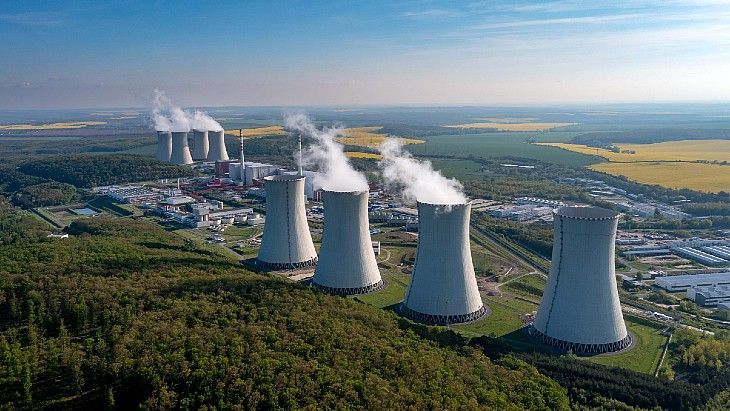
At the beginning of September 2026, several suspected deliberate acts targeting energy infrastructure were reported in Germany. The incidents primarily involved high-voltage lines and substations. In one case, an intentional short circuit resulted in the outage of five lignite-fired power plant units. The electricity system, however, remained stable, and no widespread power supply disruption occurred. Investigations are continuing, and it has not yet been confirmed whether the individual incidents are connected.
Not the power plant, but the point through which electricity flows
The most interesting aspect of these events is the choice of target itself. If the intention is to take part of a generation capacity offline, an attack does not necessarily have to target the power plant directly. Disrupting an element through which the plant is connected to the grid can have a similar effect.
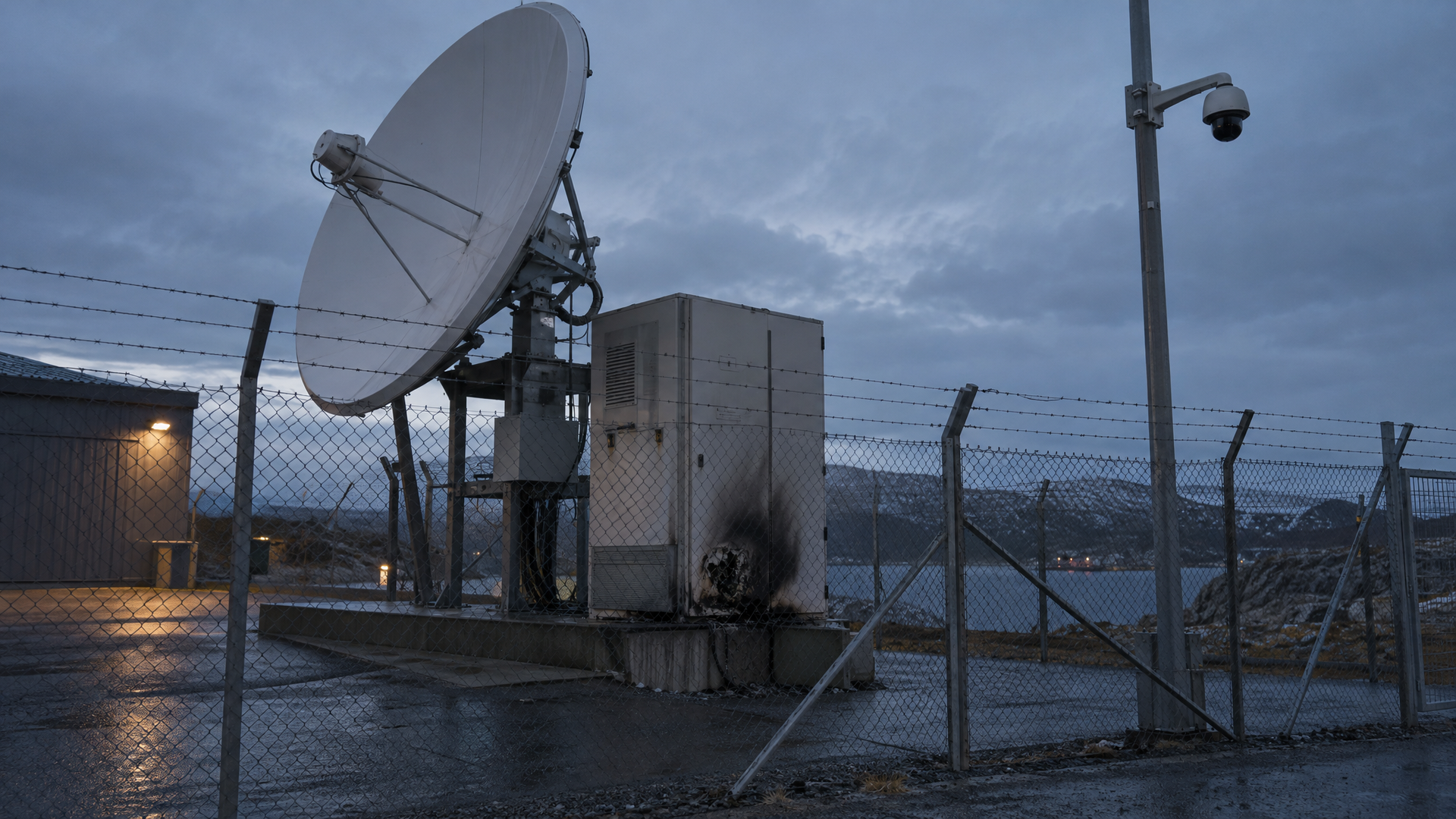
At first glance, a substation may appear to be an inconspicuous technical facility. From the perspective of the overall system, however, it can be a critical node. Its strategic importance does not necessarily correspond to its physical size or to how significant it may appear from the outside. The criticality of an infrastructure element is determined not by its size, but by its position within the system.
An attack does not necessarily require sophisticated technology
Another important finding concerns the simplicity of the methods used. Disrupting a critical infrastructure element does not always require sophisticated technology, expensive equipment or a large-scale operation. Even a relatively simple physical intervention can be effective if it targets the right location.
This also changes the way risk needs to be assessed. The complexity of an attack does not necessarily correspond to its potential impact. At critical nodes, this imbalance can be significant: a relatively simple intervention can disable an element whose importance to the functioning of the wider system is far greater than its physical appearance might suggest.
When the system absorbs an attack
Germany’s electricity system has also demonstrated another aspect of resilience. Despite the disruption, there was no widespread blackout, and the affected generating units gradually returned to operation.
Resilience therefore does not mean that every disruption can be prevented. It also means that a system can maintain its essential functions when one of its components is temporarily unavailable. The ability to “absorb” an attack is just as important for critical infrastructure as protecting individual facilities in the first place.
What does this mean for Slovakia?
Slovakia’s energy system has its own specific characteristics, and the German scenario cannot simply be transferred to the Slovak context. The recent events nevertheless raise a concrete question that is worth asking when assessing risks in Slovakia as well: which elements of our infrastructure have far greater systemic importance than their size or visibility would suggest?
These may include substations, transformers, selected technological components or other locations whose loss could significantly restrict the operation of other parts of the system.
Identifying such critical nodes is an important part of the systemic approach to resilience that the Critical Infrastructure Association of the Slovak Republic brings to the professional debate. The issue is not simply to determine which facilities are critical, but to understand their actual importance within the wider system, the consequences of their disruption, and the functions that depend on their availability. Such an approach makes it possible to set protection priorities more accurately and to pay attention to locations that might otherwise remain outside the main focus under a more traditional approach.
“The events in Germany are an important reminder that, when it comes to critical infrastructure, we also need to pay attention to locations that may not appear strategic at first sight. What matters is not only the facility itself, but its position within the system. If taking it offline can significantly restrict the functioning of other parts of the energy system, it represents a critical point from a resilience perspective, regardless of its size,” says Tibor Straka, President of the Critical Infrastructure Association of the Slovak Republic.
A New Risk Map
The incidents in Germany do not, at this stage, demonstrate a coordinated campaign against energy infrastructure. Investigations are ongoing. For Slovakia, however, they provide a useful impetus to look at its own infrastructure from a different perspective.
And this is precisely where the events in Germany can offer a valuable lesson for Slovakia. Not as a prediction of what lies ahead, but as an opportunity to examine our own infrastructure from a slightly different angle. Risk assessments should therefore also include the search for locations whose importance is not immediately apparent, but whose loss could have a fundamental impact on the system as a whole.