Heatwaves Are No Longer a Weather Issue. They Are Becoming a Security Test for Critical Infrastructure
Commentary by the Critical Infrastructure Association of the Slovak Republic
Europe is experiencing another wave of extreme heat, which is shifting from an exceptional phenomenon into a new standard. Record temperatures, prolonged drought, and the overheating or decline of watercourses can no longer be viewed solely as an environmental problem. They are increasingly affecting the functioning of the state and threatening the continuity of its basic services.
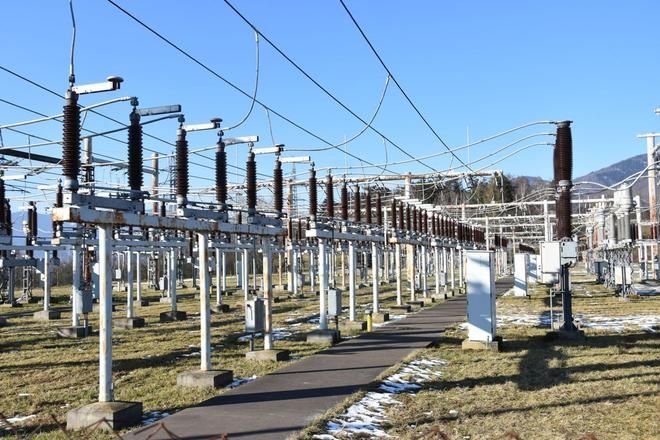
The latest cases from Hungary and Switzerland confirm that climate change no longer represents a distant risk of the future, but a concrete operational reality. The Paks and Beznau nuclear power plants had to reduce output due to a combination of low flow rates and high temperatures in the Danube and Aare rivers. These were not technical malfunctions, but a direct impact of climatic conditions.
Alongside cyber threats and technical failures, critical infrastructure today thus also faces growing pressure from climate extremes.
The Critical Infrastructure Association of the Slovak Republic Warned as Early as February
The Critical Infrastructure Association of the Slovak Republic drew attention to this development as early as 26 February 2026 — long before these scenarios began to materialise. In its article (https://www.akisr.sk/styria-z-piatich-slovakov-zazili-extremne-pocasie-je-nasa-kriticka-infrastruktura-pripravena), it clearly stated that climate extremes would systematically and increasingly raise pressure on the resilience of critical systems — not as an environmental issue, but as a security matter affecting the supply of energy, water, transport, healthcare, and digital services.
What we are witnessing in Europe today is neither a coincidence nor a surprise. It is precisely the type of development the Association has long monitored and assessed within its own analyses. The current production restrictions are a concrete confirmation of the conclusions reached by the Association's experts when evaluating climate risks. They show that the link between the temperature of watercourses and the stability of the energy system is not a theoretical consideration, but a measurable and recurring phenomenon.
"The greatest risk is not the heatwaves themselves. The real risk is if we continue to perceive them as an exceptional phenomenon rather than as a new reality for which we must prepare the entire critical infrastructure," warns Tibor Straka, President of the Critical Infrastructure Association of the Slovak Republic.
Scenarios That Are No Longer Unthinkable
The risk today does not lie in a single outage, but in the possibility of chain failure. The analyses of the Critical Infrastructure Association of the Slovak Republic work with several scenarios that are becoming increasingly likely under conditions of prolonged heat:
- Simultaneous shutdown of multiple sources. If, during peak energy demand, several large power plants had to reduce output at the same time due to the temperature of cooling water, the grid could find itself on the edge of stability, with the risk of a cascading blackout affecting entire regions.
- Collapse of cooling in cities. A prolonged power outage during a heatwave means the simultaneous failure of air conditioning, elevators, water pumping, and cooling in hospitals and social care homes — with a direct threat to the lives of the most vulnerable groups of the population.
- A struggle over water. Extreme drought may sharpen the conflict between cooling for energy production, agricultural irrigation, and the supply of drinking water, to the point where some of these needs would have to be restricted administratively.
- Failure of the digital backbone. Overheating and power outages at data centres may cripple payment systems, the communications of emergency services, and state digital services precisely at the moment they are most needed.
- Paralysis of transport. Buckling rails, road restrictions, and failures of control systems may make both supply and evacuation of the population impossible during a crisis.
None of these scenarios is catastrophic fiction. They are a combination of phenomena we are already observing in Europe today — just separately. The real threat is their simultaneous onset.
The Thermal Vulnerability Index
Existing assessments of infrastructure resilience are based predominantly on evaluating individual facilities — a power plant, a water reservoir, or a data centre — in isolation. This is precisely where we see the biggest blind spot: risk does not add up, it multiplies. Two elements that are individually considered safe may, during a temperature peak, become critical precisely because they fail at the same moment and mutually weaken one another.
As part of its analytical activities, the Critical Infrastructure Association of the Slovak Republic is therefore developing its own methodological tool with the working name Thermal Vulnerability Index. This is not about measuring temperature, but about measuring the degree of interconnection and the simultaneous sensitivity of individual sectors to thermal stress. The index combines three layers that have so far been assessed separately:
- Failure temperature threshold — the temperature of water, air, or the load at which a specific element loses its designed capacity.
- Coefficient of simultaneity — the probability that multiple elements reach their threshold at the same time (typically during a prolonged heatwave).
- Depth of dependencies — the number of critical services whose functioning is disrupted as a result of the failure of a single element before a backup system is activated.
The aim is to arrive at a single indicator that shows not what fails first, but what, upon failing, drags the most other elements down with it. It is precisely this perspective — the search for hidden triggers of chain failures — that makes it possible to direct investment where it has the highest protective effect, instead of the blanket and costly reinforcement of everything at once.
The first application of this approach to summer scenarios confirms the Association's February warning: the highest vulnerability is exhibited not by the power plants themselves, but by the nodes where energy, water, and cooling converge simultaneously — precisely the places that conventional sector-based assessment overlooks.
Chain Impacts Across the System
The scenarios described share one common feature: critical infrastructure functions as a system of communicating vessels. Individual sectors are not isolated islands, but mutually interconnected layers that burden one another during thermal stress. Energy is dependent on water for cooling, water management on electricity for pumping, and transport and healthcare on both. The weakening of one layer therefore does not remain local, but spreads further and reduces the reserve of the entire system precisely at the moment when it is needed most.
It is precisely this interconnection that determines whether an outage remains a contained episode or develops into a domino effect across the entire state.
Climate Resilience as a Security Issue
Climate change can no longer be viewed solely through an environmental lens. From the perspective of critical infrastructure, it is a direct component of national security.
Every extreme is a test of the state's ability to maintain basic services under crisis conditions. This is precisely why legislation on critical infrastructure places emphasis on the assessment of climate risks and their incorporation into resilience planning. And resilience is not built during a crisis. It arises over the long term, systematically, and on the basis of quality analyses.
From Reaction to Anticipation
The key challenge is the transition from addressing consequences to the systematic anticipation of risks: monitoring climate trends, analysing sector impacts, identifying vulnerabilities in supply chains, and creating crisis scenarios.
It is precisely in this area that the Critical Infrastructure Association of the Slovak Republic operates as a professional platform connecting the public and private sectors. With its own analytical capacities — including tools under development, such as the Thermal Vulnerability Index — it monitors climate risks, evaluates their impacts, and creates space for the exchange of experience and the early identification of threats to the continuity of basic services. Membership in the Association thus brings its partners access to expert knowledge, joint risk assessment, and a network that transforms warnings into concrete measures before a risk materialises.
A New Reality, Not an Exception
The current heatwaves are not a one-off extreme. Scientific findings unequivocally confirm that they will be more frequent, longer, and more intense. Situations such as those we see in Europe today are becoming a common part of reality.
The question is no longer whether further climate extremes will come, but whether critical infrastructure will be prepared for them. Its resilience is becoming one of the key preconditions for the security of the state, the functioning of the economy, and the everyday life of citizens.
The resilience of critical infrastructure is not a definitive outcome. It is a long-term process of continuously increasing preparedness for new risks. And it is precisely today that it is being decided how successfully we will manage them tomorrow.